Jul 10, 2026
Infinity KaleidoScope Projector Guide: 4, 6 & 8-Gobo Models
Short answer: Every Infinity KaleidoScope projector ships with a free TriScope™ (3-Prism) lens AND a free PentaScope™ (5-Prism) lens included standard — normally paid upgrades worth $547+ combined on Infinity's regular projectors — plus (on six of the seven models) a 4, 6, or 8-position gobo carousel in Static or Spin. Compare all 7 models, the two lenses, and pricing below, from $537.88 to $3,267.88.
Infinity's KaleidoScope line is built on two things a standard gobo projector doesn't have. First, every single unit — all seven of them — ships with two prism lenses included free: a TriScope (3-Prism) and a PentaScope (5-Prism), either one of which turns whatever gobo is currently projecting into a repeating, symmetric multi-image pattern instead of one plain shape. Second, six of the seven models also add a real multi-gobo carousel (4, 6, or 8 positions) on top of that, either held Static or continuously cycling in Spin mode. This guide covers both systems, breaks down all seven models, and helps you pick the right combination for your venue.
What is a KaleidoScope projector?
The Infinity KaleidoScope Projector is the base, single-image model in the line — the same proven hardware as Infinity's standard PowerPrince and Titan gobo projectors, spanning 35W to 700W and $537.88 to $2,487.88. What makes it a "KaleidoScope" rather than a standard single-gobo unit is what ships in the box: a free TriScope (3-Prism) lens and a free PentaScope (5-Prism) lens, on every order, at no extra charge.
Alongside the base model, Infinity sells six dedicated multi-gobo models — pre-built combinations of gobo count (4, 6, or 8 positions) and motion type (Static or Spin), built on the same proven multi-gobo hardware used across the standard catalog. Every one of those six also ships with the same free TriScope + PentaScope lens bundle. So across all seven products, the prism lenses are the constant; gobo count and motion are what change from model to model. We'll break down all seven below.
The free lens bundle: TriScope (3-Prism) vs. PentaScope (5-Prism)
This is the part of the KaleidoScope line that actually creates the "kaleidoscope" look. A prism lens sits in place of a standard single-image lens and physically splits whatever gobo is currently projecting into several overlapping copies, arranged symmetrically around the beam:
TriScope™ — 3-Prism

Real footage: one gobo, split into a 3-way triangular arrangement by the TriScope lens.
Splits the current gobo into 3 copies arranged in a triangular pattern. The tighter, simpler split of the two — a good default for smaller surfaces or when you want the pattern to still read clearly as "three of one image" rather than a dense cluster.
PentaScope™ — 5-Prism

Real footage: one gobo, split into a 5-way star-like cluster by the PentaScope lens.
Splits the current gobo into 5 copies in a denser, star-like cluster. More visual coverage and complexity from the same single gobo — the pick when you want the pattern to fill a bigger surface or read as a busier, more elaborate design.
On Infinity's standard (non-KaleidoScope) gobo and multi-gobo projectors, these are optional paid lens upgrades — TriScope runs +$188.88, PentaScope starts at +$358.88, over $547 combined. Every KaleidoScope model bundles both lenses standard: one ships preinstalled (you choose which, TriScope or PentaScope, when you order), and the other ships in the box as a free spare, ready to swap in yourself any time. That bundle is the real headline of this product line — it's why every KaleidoScope product page carries the "Free 5-Prism Lens" badge, even though you're actually getting both lenses, not just the one named in the badge.
How it works: prism lens + gobo carousel
The two systems stack on top of each other, and it's worth keeping them separate in your head:
The prism lens (every model)
TriScope or PentaScope, mounted where a standard lens would go. It takes whatever single gobo image is currently lit and splits it into 3 or 5 copies on the wall. This is on every KaleidoScope unit, including the single-image base model — it's what makes even the entry-level unit a "KaleidoScope" instead of a plain gobo projector.
The gobo carousel (6 of 7 models)
A wheel that holds multiple individual gobo images — 4, 6, or 8 of them — so you're not limited to one piece of artwork. Static parks the carousel on one selected gobo; Spin keeps it rotating so the image behind the prism lens changes continuously. The base single-image model skips this carousel entirely — one gobo slot, same as a standard single-image projector, still split 3x or 5x by the bundled prism lens.
Every KaleidoScope unit — base or multi-gobo — uses the same LED light engine platform as Infinity's other gobo projector lines, so wattage behaves exactly the way it does everywhere else on the site: more watts for bigger images and brighter rooms, less watts is plenty for small, dim, or close-up installs. What changes between the seven models is gobo count, motion, and the wattage floor and price that follow from them — which is exactly what the comparison table below is built to show.
Comparing all 7 KaleidoScope models
All seven products include the free TriScope + PentaScope lens bundle described above. Where they differ is gobo count, motion, wattage floor, and price:
| Model | Gobos | Motion | Wattage | Price |
|---|---|---|---|---|
| KaleidoScope Projector (base) | 1 (single-image) | — | 35W–700W | $537.88–$2,487.88 |
| 4-Gobo Static | 4 | Static | 35W–700W | $767.88–$2,717.88 |
| 4-Gobo Spin | 4 | Spin | 35W–700W | $857.88–$2,807.88 |
| 6-Gobo Static | 6 | Static | 80W–700W | $1,097.88–$2,947.88 |
| 6-Gobo Spin | 6 | Spin | 80W–700W | $1,187.88–$3,037.88 |
| 8-Gobo Static | 8 | Static | 80W–700W | $1,327.88–$3,177.88 |
| 8-Gobo Spin | 8 | Spin | 80W–700W | $1,417.88–$3,267.88 |
A few patterns worth noticing in that table. First, gobo count drives the wattage floor: the 4-gobo models start at 35W (same floor as the single-image base), while the 6- and 8-gobo models both start at 80W since more gobo positions loaded into the carousel means more surface area to illuminate before the pattern reads clearly. Second, Spin consistently costs $90 more than Static at the same gobo count — that's the motor and drive mechanism that keeps the carousel turning, not a jump in light output or a difference in the prism lens bundle. Third, price climbs with gobo count well beyond the wattage difference, since a 6- or 8-position carousel is a more complex assembly than a 4-position one.
Static vs. Spin: which should you choose?
Static
The gobo carousel is positioned once during setup and stays put on one selected image — the prism-split pattern from that gobo is fixed for as long as the projector runs. That makes Static the choice when you want a consistent, repeatable look night after night: a storefront window, a lobby wall, a backdrop that needs to photograph the same way every time. It's also the lower-cost option at every gobo count, and it has one less moving part to maintain.
Spin
The carousel rotates continuously, cycling which gobo sits behind the prism lens, so the whole multiplied pattern shifts and moves rather than holding still. Spin is the pick for anywhere the room is meant to feel alive: a dance floor, an event entrance, a brand activation where movement is the point. The $90 premium over Static buys the drive motor that keeps the carousel turning.
Neither option is "better" in the abstract — they're built for different jobs. If you found yourself nodding at "consistent, photographable, always the same," go Static. If you found yourself nodding at "moving, alive, draws the eye," go Spin. When in doubt, remember Static can generally be swapped for a Spin unit later at the same gobo count without changing anything else about the install — the wattage and mounting requirements are identical within a gobo-count tier, and both still carry the same free TriScope + PentaScope lens bundle.
Where KaleidoScope projectors get used
The repeating, symmetric pattern is the whole reason to pick a KaleidoScope unit over a standard single-gobo projector — it fills a surface with texture and rhythm instead of one clean logo, which suits certain venues far better than others:
Nightclubs & nightlife
Spin models are a natural fit for dance floors, DJ booths, and entrance walls, where a moving, layered pattern reinforces the energy of the room without the cost or rigging of a full lighting truss.
Retail storefronts
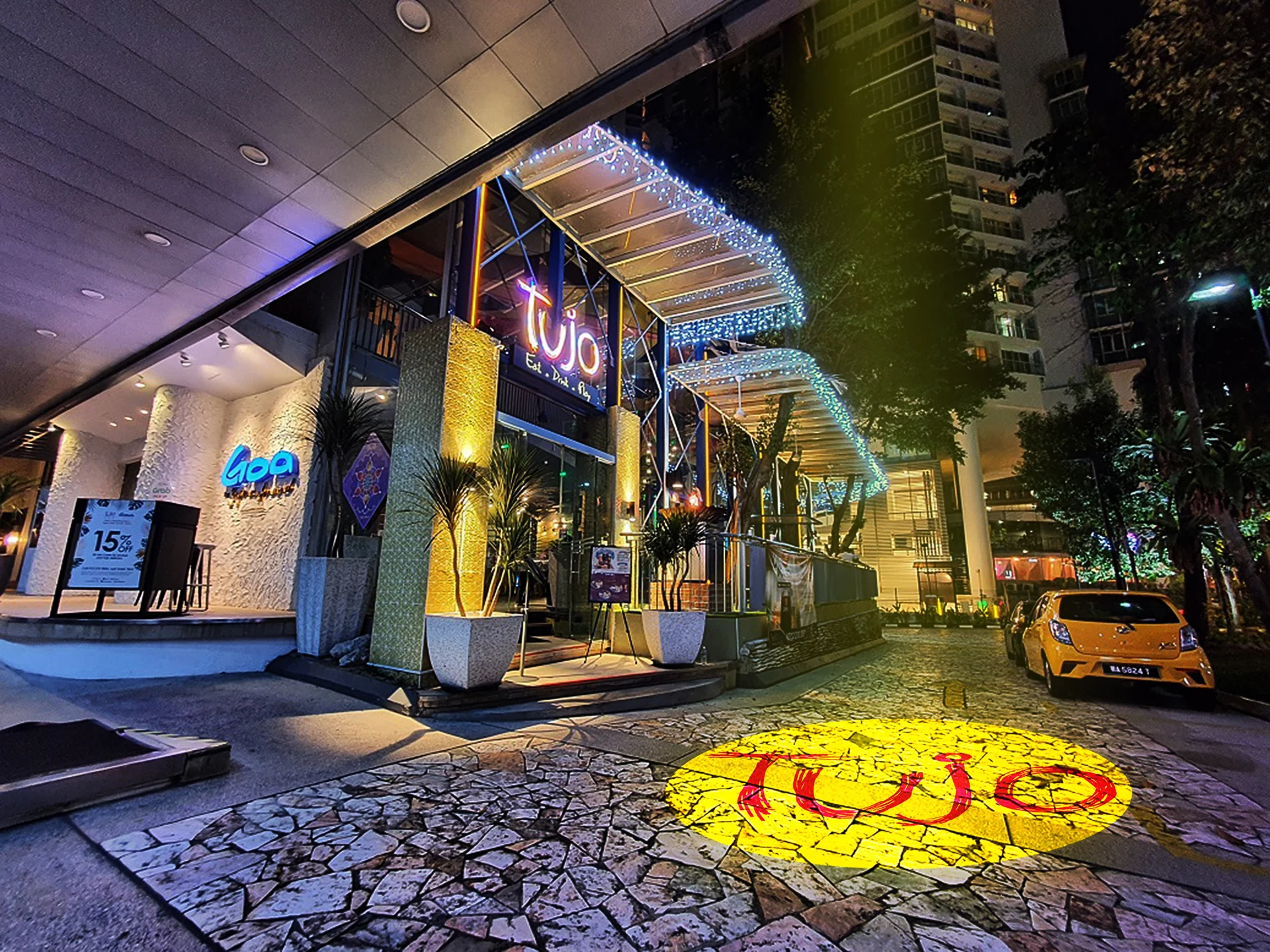
A Static unit in a display window turns an ordinary pane of glass into a patterned, eye-catching feature after hours — consistent every night, so it photographs and reads the same way for every passerby.
Event backdrops
Weddings, galas, and step-and-repeat photo walls use KaleidoScope patterns as a textured backdrop that's far more dynamic than a plain wash of color, especially when custom gobo artwork carries the couple's monogram or event branding.
Brand activations
Pop-ups and experiential marketing installs use Spin units to draw foot traffic from a distance — motion catches the eye long before a static sign would, then the repeating pattern holds attention once people are looking.
Which wattage and gobo count do I actually need?
Start with gobo count, then let wattage follow from your room. If you don't need multiple gobo images at all, the single-image base model plus your choice of TriScope or PentaScope may be all you need — it's the lowest-cost way into the line.
4 gobos — smaller spaces, simpler variety
The lightest carousel, the lowest wattage floor (35W), and the lowest price at every wattage step among the multi-gobo models. Right for boutiques, small storefront windows, intimate event corners, and anywhere the pattern needs to read clearly without dominating a large surface.
6 gobos — the middle ground
More gobo variety than 4-gobo, starting at 80W. Suits mid-size retail floors, restaurant and bar interiors, and event spaces that need more visual variety than a small window display but aren't filling a warehouse-scale wall.
8 gobos — maximum variety
The most gobo positions in the line, also starting at 80W but carrying the highest price at every wattage step. Best for large venues, big feature walls, and brand activations where the KaleidoScope effect needs to be the visual centerpiece of the room.
Once gobo count is set, wattage comes down to the same two questions that drive every gobo projector purchase on this site: how big is the image you need, and how much ambient light is in the room? A small pattern in a dim nightclub can run comfortably at the low end of a model's wattage range; a large pattern on a brightly lit retail floor or an outdoor storefront needs to climb toward the top of that model's range — every KaleidoScope model tops out at 700W for exactly that reason. If you're not sure where your install lands, our Projector Finder walks through your distance, image size, and lighting to prescribe the right wattage, and it works the same way for KaleidoScope models as it does for the rest of the catalog.
One more practical note: because every KaleidoScope unit runs on the same LED engine as Infinity's standard gobo projectors, the mounting, power, and placement guidance you'd follow for any other Infinity gobo projector applies here too — keep the projection angle close to perpendicular to avoid keystoning the pattern, and treat the wattage chart as a floor for a dim room, not a bright one.
Frequently asked questions
What is a KaleidoScope projector?
A KaleidoScope projector is a gobo projector that ships with a free TriScope (3-Prism) lens and a free PentaScope (5-Prism) lens included standard — either one splits whatever gobo is currently projecting into 3 or 5 overlapping copies arranged symmetrically, which is the repeating "kaleidoscope" look. Six of the seven KaleidoScope models also add a 4, 6, or 8-position gobo carousel on top of that.
Do I have to pay extra for the 3-Prism and 5-Prism lenses?
No. On Infinity's standard, non-KaleidoScope projectors, TriScope (3-Prism) is a +$188.88 upgrade and PentaScope (5-Prism) starts at +$358.88 — over $547 combined. Every KaleidoScope model bundles both lenses free: one ships preinstalled (your choice at checkout) and the other ships in the box as a spare.
How is a KaleidoScope projector different from a regular gobo projector, or one that rotates through images one at a time?
A standard gobo projector shows one image at a time through a single lens, even if it can cycle through several gobos in sequence. A KaleidoScope projector adds a prism lens (TriScope or PentaScope) that splits whichever image is currently showing into 3 or 5 overlapping copies, so the wall shows a combined, symmetric pattern instead of one plain shape.
What's the difference between TriScope and PentaScope?
TriScope (3-Prism) splits the current gobo into 3 copies in a triangular arrangement. PentaScope (5-Prism) splits it into 5 copies in a denser, star-like cluster. Both ship free with every KaleidoScope projector — one preinstalled, one as a spare — so you can try both without buying twice.
What's the difference between Static and Spin?
Static means the gobo carousel is positioned once and stays fixed on one image, giving you the same prism-split pattern every time the unit runs. Spin means the carousel rotates continuously, cycling the gobo behind the prism lens so the whole pattern is in motion. Spin costs $90 more than Static at every gobo count, which covers the drive motor.
How many gobos do I need — 4, 6, or 8 — or do I need the carousel at all?
If you only need one image, the single-image base KaleidoScope Projector plus your choice of prism lens is the lowest-cost option. If you want multiple gobo images available, 4-gobo models suit smaller surfaces and start at the lowest wattage (35W) and price; 6-gobo is a middle-density option; 8-gobo offers the most gobo variety and suits large venues. Both 6- and 8-gobo models start at 80W.
What wattage do I need for my venue?
It depends on your image size and how much ambient light is in the room, the same two factors that determine wattage for any Infinity gobo projector. A small pattern in a dark venue can run near the bottom of a model's wattage range; a large pattern in a brightly lit space needs to run closer to the top. Every KaleidoScope model scales up to 700W. Use the free Projector Finder if you're unsure.
Find the right KaleidoScope model for your venue ∞
Tell us your space, lighting, and the look you're after, and we'll point you to the right gobo count, motion type, and wattage.
Complete your projector setup
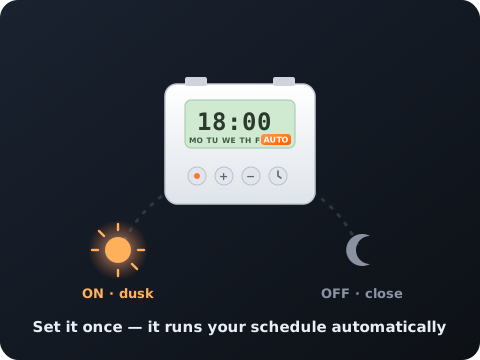
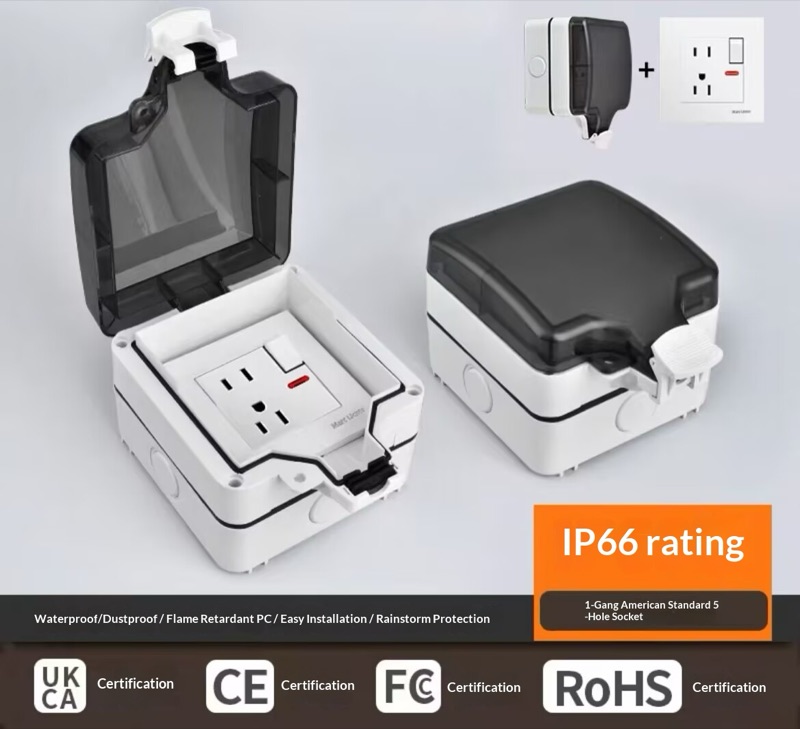
Automate when it runs and protect it from the weather — both add right on any projector.