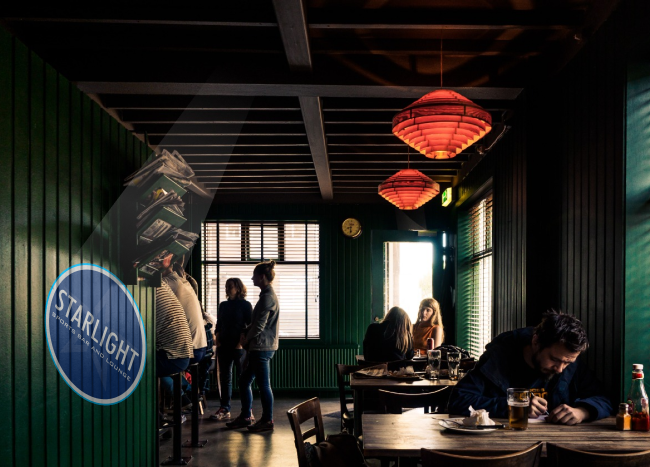
The best branded lighting in a room is the kind nobody can point at.
The Infinity Stealth Embedded is a gobo projector that disappears into the building. It recesses flush into a ceiling, a soffit or a wall, so from below all anyone sees is a clean circular aperture — and your logo, in full color, on the floor or the wall opposite. No bracket on a pole. No black box in the sightline. No cable running down a finished surface.
That is the whole argument for it, and it is why architects, designers and hotel groups specify this one when the projector itself must not be part of the design. From $288.88, in six wattages from 15W to 100W, with two free full-color custom gobos made from your artwork.
An ordinary projector goes up on a bracket in an afternoon. This one goes into the ceiling, which means the decision happens earlier — ideally while the space is being built or refitted, and always before the plasterboard closes.
What that buys you is a finish nothing else matches: the light appears from nowhere. Guests notice the logo, not the hardware, because there is no hardware to notice.
What it asks in return is a little planning:
Tell us the ceiling height and the surface you want the projection to land on and we will confirm the wattage, the lens and the exact position before anyone cuts anything.
The power supply comes in the box. There is nothing extra to source and nothing separate to order.
In practice most Stealth Embedded installs are hardwired. That is the nature of a recessed fitting — it goes into a ceiling or a soffit, the supply sits in the void above it, and an electrician connects it to the circuit the same way they would any other recessed light. There is usually no visible plug and no cable running down a finished surface, which is the entire point of choosing this fixture.
Tell your electrician it is a recessed LED fitting with its own supply and they will know exactly what to do. If the install is more involved — a long run, a remote supply position, several fixtures on one circuit — send us the details and we will spec it with them rather than leave it to guesswork on site.
On a rollout the appeal is consistency rather than any one install: settle the wattage, lens and cut-out once against your ceiling heights, set the artwork up once, and every location that follows matches. Tell us the number of sites and the ceiling heights and we will put the specification in writing and price it as a rollout.
Said plainly, because getting this wrong is expensive: the Stealth Embedded is an indoor projector. It is not waterproof and it does not carry an IP rating. Lobbies, ceilings, soffits and finished interior walls are what it is designed for, and where every one of the installs above sits.
On its own it should not be specified anywhere exposed — not in the open, not under a canopy that still catches rain, not in a dusty workshop, and not in a covered area that gets washed down. Recessing a fixture into a surface and then discovering it cannot handle the conditions means reopening a finished ceiling, which nobody wants to pay for twice. Where a fixture has to face the weather with nothing around it, the PowerPrince is the outdoor unit — IP65 sealed in an aluminum housing and built to live outside permanently. If you are unsure which side of the line your location falls on, describe it to us and we will tell you honestly — we would rather sell you the right fixture than replace the wrong one.
It can be used outdoors, on one condition: it has to sit inside an enclosure that keeps water and dust off it. We have done exactly that. A client had an existing exterior fixture on their building with a slot designed to take a recessed projector. The housing and frame were already weather-tight, so the projector sat in a sealed enclosure and never saw water — the enclosure did the protecting, not the projector.
That is a legitimate way to use it outside, but it depends entirely on the enclosure, and there is no way for us to judge yours from a product page. If you have an outdoor housing, a sign cabinet, a soffit box or a custom fixture with a slot for a recessed projector, send us the details and photos and we will tell you whether it will work. If the enclosure genuinely keeps water and dust off the unit, it usually does.
The usual arithmetic: lens number × distance = image width. The Stealth Embedded ships with the 1:0.33 as its standard lens, which suits the projects interiors actually have.
Most interior installs land between 8 and 15 feet, which is where this fixture is happiest. Twenty feet is workable in an atrium or a double-height lobby — beyond that you are asking a recessed fitting to do a job better suited to a mounted projector, and we would tell you so.
Working backwards: distance = width ÷ lens. Lens options are 0.2, 0.3, 0.33 and 0.65 — and because the aperture is cut once, it is worth getting this right on paper before installation rather than discovering it on site. Send us the ceiling height and the logo size you want and we will confirm the lens.
Wattage is not about image size — the lens sets that. It is about beating the light already in the room, and interiors are usually lit deliberately and brightly.
Do not under-buy wattage on this fixture. Embedded projectors go into hotels, corporate offices, hospitals, showrooms and lobbies — and those are some of the brightest interiors there are. They are lit deliberately, evenly and often all day. A projection that looked strong in a dim showroom can disappear entirely under a well-designed lobby lighting scheme.
Two things push the requirement up, and they stack: a bright room, and a wider lens. A wider lens spreads the same light across a larger area, so it is dimmer per square foot. If you are running a large logo in a bright space, step the wattage up rather than hoping — it is the cheapest decision you will make on this install, and the only one you cannot revisit without reopening the ceiling.
The fastest answer is the Wattage Finder. Give it your ceiling height, the size you want and how bright the space is and it returns the wattage and lens in about a minute — worth doing before an aperture is cut.
Every Stealth Embedded ships with two custom full-color gobos, free, made from your own artwork. Send a logo file, a sign file, or a photograph of existing signage — our team prepares it for projection at no charge and sends you a proof before anything is made.
Two is deliberate: most customers run their logo day to day and keep the second for a seasonal mark, an event, or a tenant change. Swapping the gobo is a quick job at the fixture. Order more any time, or start from the stock collection.
If the ceiling void is shallow or the space is small, the Infinity Embed Lite Mini is the compact version of the same idea — 7W and 12W, from $188.88, for tight cavities and short distances where a full Stealth Embedded is more fixture than the room needs.
Six wattages, four lens options and your artwork, plus the customization the rest of our range offers: power cord length cut to your run, an upgraded power supply, extra remotes and additional lenses. Because this is a recessed fitting, tell us the ceiling build-up and we will confirm the cavity depth you need before you order.
We work with customers all over the world, and shipping is included free to just about anywhere. Hotel groups, retail chains and architectural practices abroad are a large part of who specifies this fixture.
Embedded projectors are rarely bought singly — a lobby usually takes several, and a rollout takes dozens. Send the drawings or the site list through the quote form and we will price the project as a whole with project pricing on larger orders. For smaller combinations, Mix Match & Save brings the price down as you build.
Yes. Every unit is manufactured with a wide-voltage input of 110–240V AC, so it runs on standard US 120V mains straight out of the box — and on 220–240V anywhere else in the world without a converter. If you have seen figures like 24–36V or 165–265V on a spec sheet, those describe the driver's internal DC output, not the voltage at your wall.
It recesses into the building instead of mounting on it. From below you see a flush circular aperture and the projection — no bracket, no visible fixture, no cable on a finished surface. That is the entire reason people choose it: the branding shows and the hardware does not.
Often yes, if there is enough cavity depth above the surface and power can be reached. It is easier during a build or refit, but plenty go into existing ceilings. Tell us the ceiling build-up and we will confirm whether the cavity works before you order.
The power supply is included in the box — nothing extra to source. Most of these installs are hardwired, which is normal for a recessed fitting: the supply sits in the ceiling void and an electrician connects it to the circuit like any other recessed light, so there is no visible plug and no cable on a finished surface. Tell your electrician it is a recessed LED fitting with its own supply. For long runs, a remote supply position or several fixtures on one circuit, send us the details and we will spec it with them.
Not on its own. This is an indoor projector — it is not waterproof and it carries no IP rating — so it should not be specified in the open, under a canopy that still catches rain, in a dusty workshop, or anywhere that gets washed down. It can go outdoors inside a weather-tight enclosure, where something else keeps the water and dust off it — see the next question. For an exposed location with nothing to house it, the PowerPrince is the outdoor unit: IP65 sealed, aluminum housed, built to live outside permanently.
Yes, and we have done exactly that. A client had an exterior fixture on their building with a slot built to take a recessed projector — the housing was already weather-tight, so the projector sat in a sealed enclosure and never saw water. The enclosure did the protecting, not the projector. If you have an outdoor housing, sign cabinet or custom fixture with a slot for a recessed unit, send us photos and the details and we will tell you whether it will work.
More than you think. Hotels, offices, hospitals and showrooms are among the brightest interiors there are, lit evenly and often all day, and a projection that looked strong somewhere dim can disappear in them. A wider lens makes it harder again, because the same light is spread over more area. Step the wattage up rather than hoping — it is the cheapest decision on the install and the only one you cannot revisit without reopening the ceiling. The Wattage Finder sizes it properly.
Lens number × ceiling height. On the standard 1:0.33 lens that is about 3.3 ft from a 10 ft ceiling and 4 ft from 12 ft. Lens options run 0.2 to 0.65. Because the aperture is cut once, confirm this on paper first — send us the ceiling height and the size you want.
It depends on how bright the interior is, not how big the logo is. Low ceilings and moody interiors: 15–25W. Standard lobbies and retail: 35–55W. High ceilings, atriums and daylit spaces: 80–100W. The Wattage Finder settles it in a minute.
Two, free, in full color and made from your own artwork — the standard for every single-lens Infinity projector. Most customers run their logo daily and keep the second for a season, an event or a tenant change. Order more any time.
No. Send a logo file, a sign file, or a photo of your existing signage. Our team prepares it for projection at no extra cost and you approve a proof before anything is cut.
Yes — the gobo swaps at the fixture. That is the point of the format: the fitting stays in the ceiling, the message changes. Worth planning access to the aperture when the install is designed.
Look at the Embed Lite Mini — 7W and 12W from $188.88, the compact version of the same idea for tight cavities and short distances.
50,000 hours. At six hours a night that is over twenty years, which matters more here than on a bracket-mounted unit — nobody wants to reopen a finished ceiling.
Yes, and it is how most of these are bought. A lobby takes several and a rollout takes dozens. Send the drawings or site list through the quote form and we will price the project as a whole.
Typically 1–2 weeks including your custom gobos. For a construction program, tell us the date you need them on site and we will confirm against it.
Most branding announces itself with an object — a sign, a panel, a fixture bolted to something. This does the opposite: the brand appears and the equipment disappears. Once a designer sees a logo arriving from an invisible source, the question stops being where to mount a projector and becomes which surfaces in the building deserve one. Join The Projection Revolution ∞
That is what it is best at. Because the fixture is recessed there is nothing that varies site to site - no visible housing to match a ceiling, no bracket that reads differently in a low soffit than a high one, nothing for a store manager to re-aim. Settle the wattage, lens and cut-out once against your ceiling heights and repeat it. We will put the specification in writing so a facilities manager in one building and a shopfitter in another install the same thing without a conversation.
Yes, and this is the detail worth getting right early. The projection size comes from the lens and the throw, so a 9 ft lobby and a 16 ft atrium need different lenses to land the same size mark on the floor. Send us the ceiling height for each site and we will spec the lens per building so the logo comes out the same size everywhere - which is the thing people actually notice.
As a rollout, not as separate orders. Tell us the number of sites, the ceiling heights and roughly when they go in, and we will quote the whole programme, including the gobos for every unit and spares. Ordering site by site at list price is the most expensive way to do the same job.
It suits this fixture better than most. Recessed units go in while a ceiling is open, and that only happens during a refit - so a rollout that runs over a year or two is normal here. Order in batches against the same written specification and the last location matches the first, even if it is eighteen months later.
Yes, and it works best when the specification is fixed centrally first. We hold the agreed spec and the approved artwork, so an individual franchisee ordering later gets exactly what head office signed off rather than choosing a wattage themselves. It keeps the brand consistent without head office having to place every order.
New glass in the same fixtures. The gobo is the only part that carries your artwork, so a rebrand, a seasonal campaign or a change of tenant means swapping a disc - no ceiling work, no new hardware, no re-cutting apertures. On an estate of forty sites that is the difference between a mailing and a construction programme.
Yes. Each fixture takes its own gobo, so a group brand in the lobbies and a location name at the entrances is simply two designs. It is also how operators handle co-branding - the landlord's mark in a shared atrium and the tenant's in their own space.
Yes. Once your logo has been set up and proofed we keep it, so a replacement gobo or a new location is a reorder rather than a fresh artwork job. That matters most on an estate, where the units going in next year need to match the ones already installed.
Glass gobos do not wear out in normal use - there is nothing touching them - so spares are about logistics rather than failure. For a multi-site rollout we usually suggest a small central stock so a damaged unit or a late-added site is a next-day fix instead of a new production run. Tell us the site count and we will suggest a number.
Your own shopfitter or electrical contractor, working to our written specification. There is no commissioning software and no calibration step, which is exactly why it scales: the skill needed is cutting an aperture and pulling a supply, and every trade already has it. We stay available to the contractor during the first install so the rest go in without us.
Often yes, if there is enough cavity depth above the surface and power can be reached. It is easier during a build or a refit, because the ceiling is already open. For a retrofit across an estate the honest answer is that it depends on the ceiling build-up in each building - send us the details and we will tell you which sites are straightforward and which are not.
Corporate lobbies, hotel receptions and showrooms are among the brightest interiors there are - lit evenly, often all day - and a projection that looked strong somewhere dim can disappear in them. Step the wattage up rather than hoping. It is the cheapest decision on the install and the only one you cannot revisit without reopening the ceiling.
That is the point of a recessed fixture. There is no housing on show, nothing at head height, nothing anybody can knock or unplug, and no cable to route across a finished ceiling. In a retail unit or an office lobby it reads as part of the building rather than as equipment that was added.
Very little. There is no bulb and no consumable, the gobo does not wear, and the LED is rated in tens of thousands of hours. What it does need is the same thing every recessed downlight needs - an occasional wipe of the lens where a site is dusty. On an estate that folds into whatever cleaning already happens at high level.
Yes. Anything that switches the circuit will switch the fixture, so it follows building hours through the same control system as the rest of the lighting. Across an estate that is usually simpler than any per-fixture control would be, because every site already has one.
We would encourage it, and most multi-site orders start that way. Put one unit in the ceiling of the location you are least sure about, at the height you would actually use, and look at it during a working day with the lights on. It settles the wattage and the lens for every site that follows.
Source: Infinity Projectors manufacturer specification sheet. Recommended daily duty cycle is not separately spec’d by the manufacturer for this line — the LED engine is rated for continuous operation over its 50,000-hour life.
Yes. Most projectors include a focus adjustment. You may need to fine-tune focus during setup to achieve the sharpest image.
Yes, they have cooling fans, but the sound is minimal and not disruptive in most environments.
Most projectors ship and arrive within 1–2 weeks. Certain models or larger orders may take 2–4 weeks.
No. Due to shipping restrictions, batteries are not included. Please purchase the appropriate batteries locally. Most projector remotes require 23A 12V batteries. You may purchase those batteries here.
No. Projectors do not include timers, but clients often add external timers if needed.
We can make the artwork smaller in the gobo slide or provide a smaller lens (like 1:0.5). This ensures the image doesn’t exceed your desired size.
Yes. Infinity Projectors provides free art setup. Send us your logo, concept, or even rough sketches, and we’ll prepare your gobo design.
Yes. Rentals are available, typically at 40–50% of the purchase price. However, we recommend buying for better long term value.
Yes. High wattage projectors are built for larger spaces and longer distances. They spread light over wider areas while maintaining clarity.
Yes, but this may shorten its lifespan. Projectors are rated for about 8 hours of daily use. Extended runtimes should be used sparingly or with models built for continuous use.
Projecting onto tall buildings can be challenging if there isn’t a mounting point across from the surface. Angles beyond 25–30° distort logos. Alternate setups or additional planning may be required.
Yes. We’re always happy to help guide clients through setup, including projector placement, angles, and lens selection. Our support team can walk you through the process.
See our mounting guide for poles, walls, ceilings and ledges, with close-up diagrams and real install photos.
Yes. Through PayPal Pay Later, you can finance larger purchases, making it easier to manage costs for bigger installations.
No. Infinity Projectors are designed to work with standard outlets in most regions. Regional cord options are available at checkout
No. Most are ready to use after focusing. Some advanced setups with DMX or automation may require configuration.
Yes. We love guiding customers and offer continued support via phone or email. Whether it’s setup, troubleshooting, or design tips, we’re here to help ∞.
Give Rating
Your Review
Drag and drop your media files here, or click to upload — up to 5 files, 50MB each
Company Name (optional)
Your Name
Your Email
Not published — we only use it to confirm your order and reply to you.