Aug 06, 2026
Do I Need a Transformer for My Gobo Projector? Voltage & Power, Explained

Every Infinity projector plugs into a normal wall outlet — no transformer to buy, no electrician to call. Here’s exactly how the power supply handles the voltage, so you know precisely what you’re plugging into what.
Why you’ll see two different voltage numbers
Look up the specs on a gobo or logo projector and you’ll run into two numbers that seem to disagree: a low voltage on one line, a much higher one on another. Both are correct. They’re not describing two different products — they’re describing two different stops on the same power path, before and after the same power supply.
1. The wall: standard household or commercial power
This is ordinary power — the same kind that runs a lamp or a phone charger. Most Infinity projectors (Indoor, Outdoor, Multi-Gobo, Water Ripple and similar lines) have a wide-range, auto-switching power supply built directly into the fixture, rated for AC 85–265V — comfortably covering every country’s standard mains power, from a US 120V outlet to a European 230V outlet, with no user action.
2. The power supply: your built-in “transformer”
Its only job is converting the wall’s AC power down to the lower, steady voltage the LED engine actually uses. In the lighting industry it’s usually called a “driver,” but calling it a transformer is fair too — that’s exactly what it does. It ships included with every unit; there’s nothing extra to source or wire in.
3. The projector head: a low, safe voltage — the exact number depends on the line
This is where it matters which product you have, so here’s the real number per line, straight from our manufacturer’s spec sheet:
| Product line | Power supply location | Rated voltage |
|---|---|---|
| Indoor, Outdoor, Multi-Gobo (4/6/8), Water Ripple, FlexMount, ExtendArm | Built into the fixture housing | AC 85–265V (wide-range, worldwide) |
| High-Wattage (150W+) | Built into the fixture housing | AC 165–265V |
| Embedded / Recessed (Stealth Embedded, Embed Lite) | Separate driver, included in the box | AC 24–36V at the fixture head |
| Small 7W / Track Lite / Mini Beam | Separate driver, included in the box | AC 21–25V at the fixture head |
The compact recessed and mini lines run their fixture head on a genuinely low voltage, closer to landscape-lighting territory, and need a small external driver to get there from wall power — the wider-body lines build that same driver directly into the housing. Either way, the driver that bridges the two ships included, so the customer-facing answer is identical: plug it in, nothing else to buy.
So what do I actually need to buy?
| Your install | What you need |
|---|---|
| Standard indoor or outdoor plug-in projector | Nothing extra. Plug it into any outlet. |
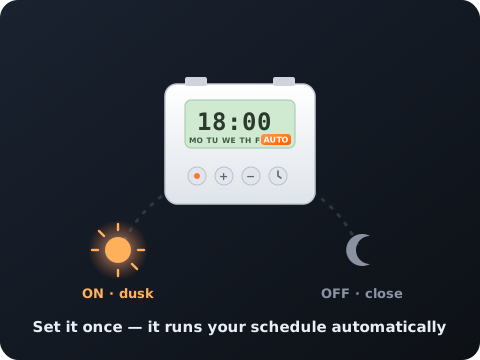
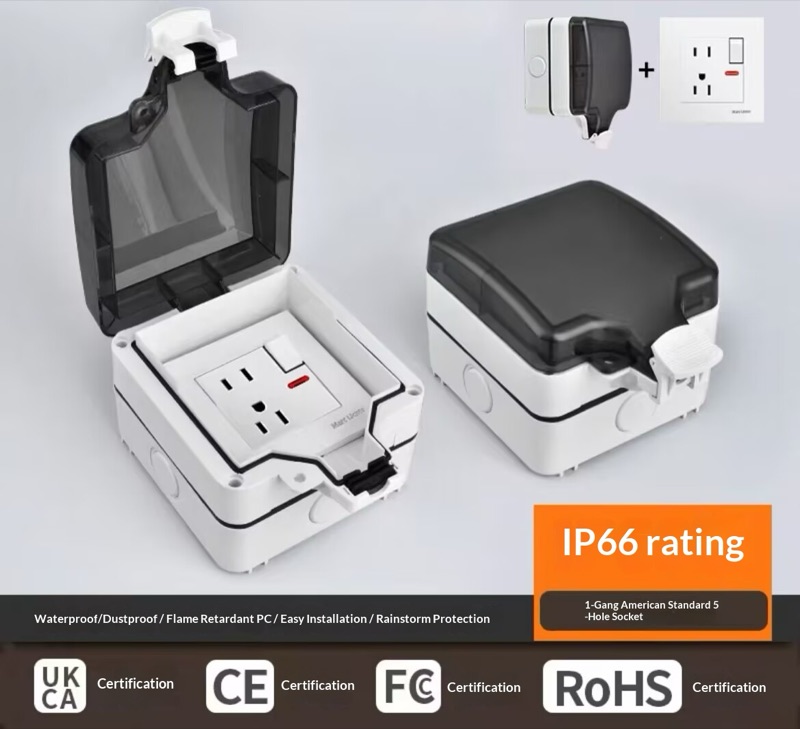
| Outdoor plug-in projector | A GFCI-protected outdoor outlet (a safety-code requirement for wet locations, not a voltage issue) — pair it with a weatherproof timer and switch cover if you want it fully automated. |
| Large architectural or recessed commercial install | Sometimes hardwired by a licensed electrician to a remote low-voltage transformer sized to the exact model, the way landscape lighting is. Read our hardwired vs. plug-in guide to see which one fits your project. |
Will it trip a breaker?
No. Wattage tells you the draw: at 120V, even our highest-wattage single unit (100W) pulls well under 1 amp. A standard household circuit is rated for 15–20 amps, so you could run well over a dozen of our projectors on one circuit before it’s a concern. For a quick gut-check on any unit: amps ≈ watts ÷ 120.
Will it work outside the US?
The voltage, yes — the wide 100–240V input range covers virtually every country’s mains power automatically. The one thing that can differ is the physical shape of the plug on the end of the cord. If you’re installing outside the US, you may only need a simple plug-shape adapter for your outlet — not a voltage converter, just a different-shaped plug. Let us know your destination country and we’ll confirm the right cord for your order.
Not sure which wattage fits your space? Answer three quick questions about distance, size and lighting and we'll match you to the right projector.
Find my wattage →Frequently asked
Do I need a transformer for my gobo projector?
No. Every Infinity plug-in projector ships with its power supply already built into the cord — that power supply does the job of a transformer, converting standard wall power down to the low voltage the LED runs on. You just plug it into a normal outlet.
What voltage does a gobo or logo projector actually use?
Two, at two different points, and the exact numbers depend on the product line. Most Indoor/Outdoor/Multi-Gobo units have a fixture-integrated driver rated AC 85–265V at the wall; recessed Embedded and compact Small-7W/mini units run their fixture head on a lower AC 21–36V, fed by an included external driver. Either way, both numbers are correct for the same unit — input and output of the same power supply, not two different specs.
Can I just plug my projector into a normal wall outlet?
Yes, for every standard plug-in model in the catalog. Whether the driver is built into the fixture or supplied as a separate included component, it handles the wall-power conversion automatically — no electrician and no extra hardware required. Large architectural or hardwired installs are the one exception.
What’s the difference between a projector’s input voltage and output voltage?
Input voltage is what the power supply accepts from the wall outlet (AC 85–265V on most lines, narrower on High-Wattage models). Output voltage is the lower, safe voltage the power supply sends to the LED engine — a genuinely low AC voltage on the Embedded/mini lines, run through a driver built into the housing on the larger lines. The power supply sits between the two and does the conversion automatically.
Will my projector work in a country with different voltage than the US?
Yes, on the standard wide-range lines — the built-in power supply auto-switches across AC 85–265V, which covers standard mains power in virtually every country. The only thing that might differ is the physical shape of the wall plug, which a simple plug-shape adapter handles.
How many amps does a gobo projector draw, and will it trip a breaker?
Very few. As a rule of thumb, amps is roughly watts divided by 120 on a US outlet, so even a 100W unit draws well under 1 amp. A standard 15–20A household circuit has plenty of headroom for multiple units.
Complete your projector setup
Automate when it runs and protect it from the weather — both add right on any projector.