Aug 06, 2026
Laser vs. LED Line for Warehouse Safety
Short answer: For most warehouse floor-line marking — long aisles, bright loading docks, anywhere you need one unit to cover real distance — a laser line is the more efficient choice: laser diodes run close to 100% efficient and hold a tight, sharp line at range, while LED line projectors are typically only around 10% efficient and need meaningfully more wattage (often several units) to match that reach. LED still has a place for short, close-range lines where a softer, wider beam is fine. Infinity's own product in this space is the Laser Safety Line Projector — we don't sell a general LED line projector, so this guide compares the two technologies honestly rather than steering you toward our catalog.
"Laser or LED?" comes up as soon as you start pricing floor-line projectors for a warehouse, loading dock or parking structure. The two technologies solve the same problem — a bright, durable line that replaces tape or paint — but they get there differently, and that difference actually changes which one is right for your specific floor. Here's the honest, scenario-by-scenario breakdown.
Laser line vs. LED line, at a glance
| Laser line | LED line | |
|---|---|---|
| Light source | True laser diode | LED through a line-generating lens |
| Energy efficiency | Close to 100% | Typically around 10% |
| Line character | Tight, sharp, focused edges | Wider, softer / more diffused |
| Best in bright ambient light | Yes, especially green | Needs more wattage to compete |
| Best up close, low wattage | Fine, but mind eye safety at close range | Generally gentler on the eyes up close |
| Coverage per watt over distance | High — fewer units for a long run | Lower — more units/wattage for the same length |
| Infinity's product in this category | Laser Safety Line Projector, $588.88–$688.88 | Not currently in our catalog |
How each one actually works
Laser line projectors
- A laser diode fires a coherent beam through a line-generating lens, producing a genuinely straight, tightly focused line.
- Because the beam stays collimated over distance, the line holds its brightness and sharpness much further from the unit than a diffused source.
- Laser lines in this category are almost always red, green or blue — the same colors used for laser levels and machine-guarding light curtains.
LED line projectors
- An LED — inherently a diffused, wide-angle light source — is passed through a line-generating lens to shape it into a line.
- The result is a softer-edged, wider line that spreads more as it travels, which is exactly why it needs more raw wattage to hold up at distance.
- That same diffusion is also why an LED line reads as gentler and less harsh up close than a laser at the same brightness.
The wattage math: why laser wins on long runs
The real difference between the two comes down to how efficiently each source turns electricity into usable line. Laser diodes convert close to 100% of their input power into the beam; LED line projectors typically run around 10% efficient once you account for the diffusion and lensing needed to shape an LED into a line. A comparison published by industrial-safety lighting suppliers puts a number on that gap: covering a genuinely long line — on the order of 100 meters (about 330 ft) — can take a single 50W-class laser unit, while reaching the same coverage with LED line projectors can take on the order of 17 units wired together, roughly 10x the total wattage for the same length of line.
To be clear on scope: that 100-meter figure describes the underlying laser-vs-LED technology gap in general industrial use, not a spec of Infinity's own unit — our Laser Safety Line Projector is built and priced for warehouse-aisle distances (up to 30 ft at its longest lens ratio), not a 100-meter run. See the exact wattage-to-price breakdown on our laser line projector cost guide. The efficiency principle is the same at any scale: a laser source needs less total wattage to hold a sharp line over distance than an LED source does.
Which is actually easier to see
Bright, mixed-light areas
Loading docks with bay doors open to daylight, or aisles under strong overhead lighting, favor laser — the tight, focused beam holds contrast against ambient light better than a diffused LED line at comparable wattage.
Dark flooring & long viewing distances
Green laser lines are the easiest color to see against dark concrete or long sightlines — the human eye is simply more sensitive to green wavelengths than red, which is why green is common on safety and forklift-warning lasers specifically.
Short, close-range lines
For a line viewed from just a few feet away — a packing station, a single doorway — an LED's softer, wider line is easier on the eyes at close range and doesn't need laser-grade focus to read clearly.
Dusty or hazy air
Both technologies scatter somewhat in dust or fog, but a laser's higher per-watt brightness generally punches through haze more reliably than an equivalent-wattage diffused LED line.
Eye safety: what Class 3B actually means
Laser line projectors in this category are typically rated Class 3B for eye safety — the same class as most laser levels and barcode scanners. That means the beam is safe under normal use: the human blink reflex is fast enough to protect your eyes from momentary, incidental exposure, but you should still avoid staring directly into the beam at close range, and mounting height and angle matter for the same reason they'd matter for any industrial safety light. This is general industry guidance for laser-line products in this category, not a specific certification claim about any one manufacturer's unit — check the exact documentation for whichever projector you're evaluating. LED line projectors, by contrast, aren't laser-classified at all, since a diffused LED source doesn't carry the same concentrated-beam hazard profile.
Real warehouse scenarios: which one actually fits
Long, bright loading dock aisle
Bay doors open, daylight spilling in, 20–30 ft of aisle to mark. Laser wins — you need reach and contrast against bright ambient light, and a single laser unit covers ground that would take several diffused LED units to match.
Tight packing or QC station
A short line viewed from a few feet away, all day, by the same employees. LED (or a low-wattage laser) can work well here — softer and gentler up close matters more than long-range punch.
Retrofitting painted forklift lanes
Existing paint scuffs, chips and needs repainting every few months under forklift traffic. Either technology beats paint — projected light doesn't wear, chip or wash away — but a laser line covers a longer painted lane with fewer fixtures.
Dim back-corner storage aisle
Low-traffic, low ambient light. A lower-wattage laser is plenty — this is the one place where overbuying wattage (laser or LED) is pure wasted cost, not better safety.
What Infinity actually sells here
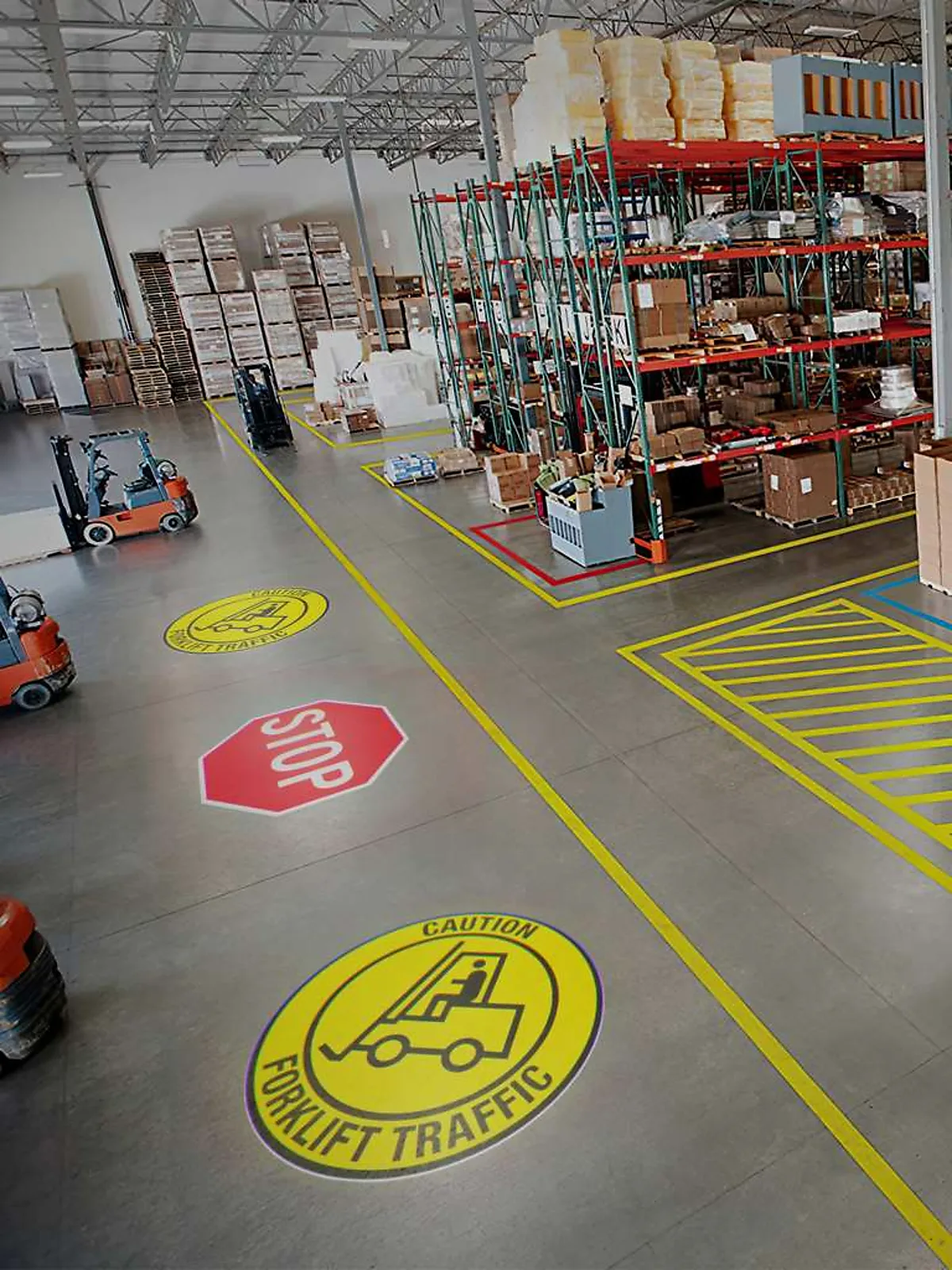
To be direct about scope: Infinity doesn't carry a broad catalog of laser projectors. Our product in this specific category is the Laser Safety Line Projector — a laser unit chosen specifically for warehouse-floor line marking, in 10W to 40W versions, indoor-rated as standard with an outdoor weatherproof housing available, a bold projected line, and laser color set by wattage — 10W red only, 20W red or green, 30W and 40W green, red or blue. It's built for exactly the efficiency and reach advantage laid out above, not marketed as a general-purpose laser product. If your facility also needs an actual sign, symbol or message rather than just a boundary line, pair it with a gobo safety-sign projector — see the full picture on our Warehouse Safety & Signage page, or get exact pricing on our laser line cost guide.
Frequently asked questions
Should I choose a laser line projector or an LED line projector for my warehouse?
For most warehouse floor marking — long aisles, bright loading docks, anywhere one unit needs to cover real distance — a laser line projector is the more efficient choice, since laser diodes run close to 100% efficient versus roughly 10% for LED. LED still suits short, close-range lines where a softer, gentler beam matters more than reach. Infinity's own product here is the Laser Safety Line Projector.
Why is a laser line projector more efficient than an LED line projector?
Laser diodes convert nearly all of their input power directly into a focused beam, while LED line projectors lose most of their output to diffusion as the light is shaped into a line, running around 10% efficient. A published industry comparison found that covering a 100-meter line can take a single 50W-class laser unit versus roughly 17 LED units wired together for the same coverage — about 10x the total wattage.
Is a laser safety line projector safe to look at?
Infinity’s Laser Safety Line Projector is rated Class 3B at every wattage. Class 3B light is hazardous to the eye on direct exposure and the blink reflex does not protect you, so the fixture is mounted overhead and aimed down at the floor — never at eye level and never across a space — but you should still avoid staring directly into the beam at close range. This is general guidance for the category; check the specific documentation for the unit you're evaluating.
Is green or red the better laser line color for a warehouse floor?
Green is generally easier to see against dark flooring, over long viewing distances, and under strong overhead lighting, because the human eye is more sensitive to green wavelengths. Red is the common default and works well in most typical indoor lighting; green is worth the upgrade for darker or brighter-than-average conditions.
Does Infinity sell LED line projectors too?
No — Infinity's product in this category is specifically the laser-based Laser Safety Line Projector, built for the reach and efficiency advantage that suits warehouse floor marking. We don't currently carry a general-purpose LED line projector or a broader laser projector catalog beyond this safety application.
Not sure which line fits your floor? ∞
Tell us your aisle length, ceiling height and lighting, and we'll size the right wattage — or see the exact pricing first.
Complete your projector setup
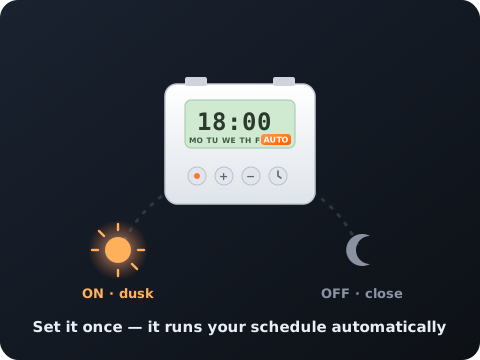
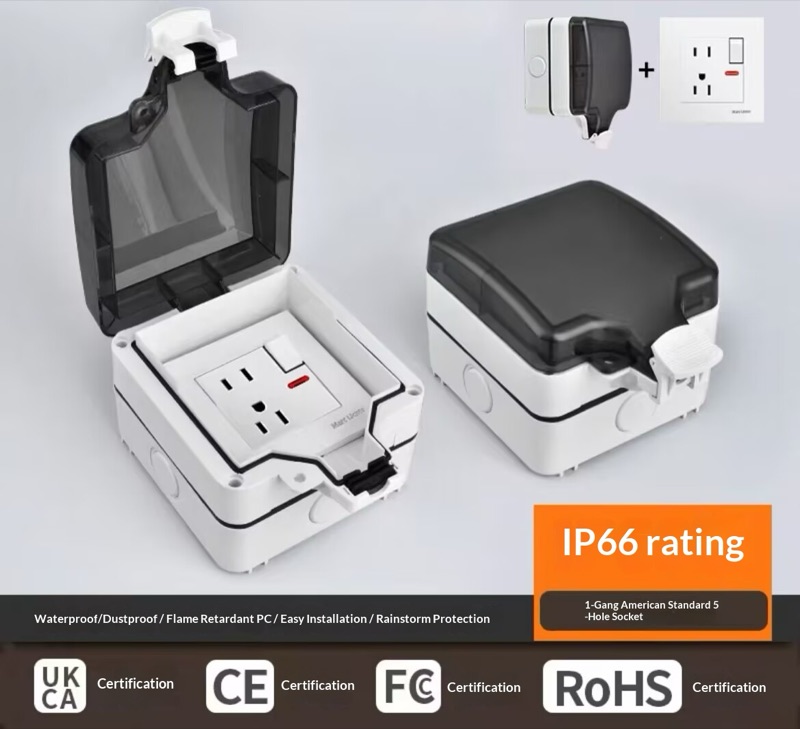
Automate when it runs and protect it from the weather — both add right on any projector.