Aug 06, 2026
Can I Hardwire My Gobo Projector? Plug-In vs. Hardwired Installs Explained

Most customers plug their projector into a normal outlet and they’re done. But if you’ve seen a logo projecting from a building where there’s no cord or outlet in sight, that one was hardwired instead. Here’s the real difference, and how to know which fits your project — explained plainly, because most people (us included, until we asked) have never had a reason to learn it.
Plug-in: the path most customers take
A plug-in projector has its power supply built right into the cord. You mount the projector, plug the cord into a normal outlet, and it’s running. No electrician, no wiring, nothing to schedule. For more on exactly how that built-in power supply works, see Do I Need a Transformer? Voltage & Power Explained.
- Fast. Mount it, plug it in, adjust the focus. Most installs are done same-day.
- Flexible. Easy to move, relocate, or take with you if you change spaces or run a seasonal display.
- No electrician required. The vast majority of our residential, retail and small-business customers install it themselves.
Hardwired: the path for permanent and multi-unit installs
Hardwiring skips the wall plug. Instead, a licensed electrician runs power to a remote transformer sized for the job, and the projector (or several projectors) wire directly into it — the same way landscape lighting or recessed ceiling downlights are commonly installed. It’s a very familiar wiring pattern for most electricians, even ones who haven’t worked with projectors before.
- No visible cord or outlet. Cleaner for a building facade, a lobby ceiling, or anywhere appearance matters.
- Built for permanence. The natural choice when a projector is staying in one spot for years, not weeks.
- One transformer, multiple projectors. Several units can share a single properly-sized transformer instead of needing an outlet at every mounting point — common on multi-logo buildings or larger commercial jobs.
- Sometimes required by the space. Some commercial and architectural projects call for it either by design or by local code, especially where there’s no accessible outlet at all.
Plug-in vs. hardwired, side by side
| Plug-in | Hardwired | |
|---|---|---|
| Who installs it | You, in minutes | A licensed electrician |
| Best for | Most residential, retail & small-business installs; seasonal or temporary displays | Permanent building/architectural installs; multi-unit commercial jobs |
| Appearance | Cord and plug visible | Clean, no visible cord |
| Flexibility | Easy to move or relocate | Fixed once installed |
| Power supply | Built into the cord, one per unit | A remote transformer, can serve multiple units |
| Underlying electrical principle | The same in both cases — wall/line power converted down to the low-voltage DC that actually runs the LED | |
Which one should you choose?
If you’re not sure, start with the simplest question: is this projector staying in exactly one spot for years, or does it need to move, get swapped seasonally, or go somewhere with an easy outlet nearby? Most answers to that question point straight at plug-in. Hardwiring earns its extra step when the install is permanent, visible cords aren’t acceptable, or you’re running several units off one shared power source.
Planning a permanent or multi-unit install? Tell us your total wattage and layout and we'll help you and your electrician size the right transformer.
Talk to us about your install →Frequently asked
Can I hardwire my gobo projector instead of plugging it in?
Yes. Hardwiring is a common choice for permanent building, architectural and multi-unit installs. A licensed electrician wires the projector to a remote transformer instead of using a wall plug — the underlying low-voltage principle is the same as a plug-in unit.
Do I need an electrician to hardwire a projector?
Yes, always. Hardwiring involves line-voltage wiring and correct transformer sizing, which is licensed-electrician work regardless of your own experience with electrical projects. We can confirm total wattage and recommend equipment, but the wiring itself should go through a licensed electrician.
What’s the difference between a plug-in and a hardwired gobo projector?
A plug-in projector has its power supply built into the cord and plugs into a normal outlet — no electrician needed. A hardwired install skips the wall plug and wires the projector directly to a remote transformer installed by an electrician. Both convert the same wall/line power down to the same low-voltage DC that runs the LED.
Can multiple projectors run off one transformer?
Yes, that’s one of the main reasons commercial and multi-logo installs choose hardwiring — several projector heads can share a single transformer sized for their combined wattage, instead of needing a separate outlet at every mounting point.
Is hardwiring better than plugging in?
Neither is universally better — they fit different situations. Plug-in is faster, flexible, and needs no electrician, which is right for most residential, retail and temporary installs. Hardwiring is the better fit for permanent, appearance-sensitive, or multi-unit commercial installs.
Does hardwiring change how the projector itself works?
No. The projector still runs on the same low-voltage DC either way. Hardwiring only changes how power reaches it — through a remote transformer an electrician wires in, instead of through the built-in power supply on a wall-plug cord.
Complete your projector setup
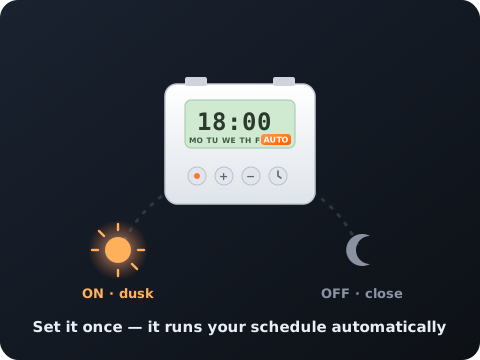
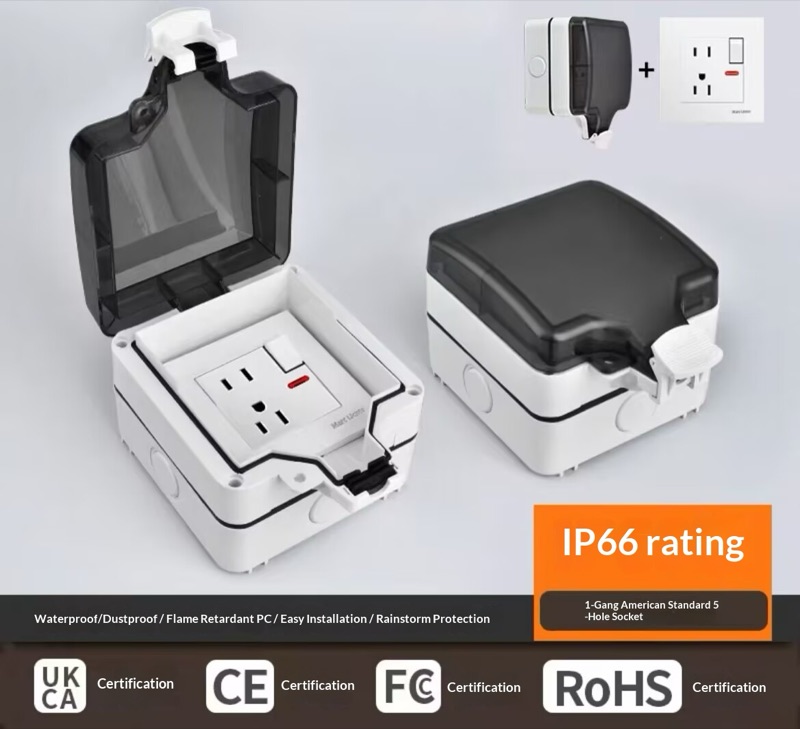
Automate when it runs and protect it from the weather — both add right on any projector.