Jul 10, 2026
Infinity KaleidoScope 6-Gobo Spin Projector Guide
Short answer: The Infinity KaleidoScope 6-Gobo Spin Projector loads six gobo designs into a motorized carousel that automatically cycles through all six over time — built for dance floors, DJ booths and live event energy. Every unit also ships with both a 3-Prism (TriScope™) lens and a 5-Prism (PentaScope™) lens included free (a $188.88 value), so whichever design is currently in the beam gets multiplied into 3 or 5 symmetric copies. It runs 80W to 700W ($1,187.88–$3,037.88). If you actually want the carousel to hold still on one design instead of cycling, see the 6-Gobo Static Projector guide instead.
A fixed logo on a wall reads as decor. A carousel that keeps rotating through fresh designs reads as an event. The KaleidoScope 6-Gobo Spin loads six gobo designs into a motorized carousel that never stops cycling — and because every unit ships with two prism lenses included free, whichever design is currently in the beam gets split into a repeating, symmetric pattern too. Here's how the spinning carousel and the bundled lenses work together, what it costs to run at each brightness level, and when six gobos in motion beats four or eight.
What is the KaleidoScope 6-Gobo Spin Projector?
It's an LED gobo projector built around a six-position motorized gobo carousel that's designed to keep turning during normal operation, automatically advancing through its six loaded designs one after another. Where Infinity's single-gobo units project one steady design and the 6-Gobo Static version locks that same carousel in place, the Spin model is built specifically to keep cycling.
The second half of the KaleidoScope story is the lens. Every KaleidoScope unit — this one included — ships with both a 3-Prism (TriScope™) lens and a 5-Prism (PentaScope™) lens in the box, at no extra charge. One ships preinstalled (your choice), the other rides along as a free spare. Whichever prism lens is installed splits whatever single gobo design is currently in the beam into 3 or 5 symmetric copies — that's the actual "kaleidoscope" visual, layered on top of the carousel's own rotation.
How it actually works: rotating carousel + prism lens
Two mechanisms are doing different jobs here, and combined they're what makes the Spin model read as constant motion:
The 6-gobo carousel — automatically changing which design shows
A wheel holding six individual gobo slides, driven by a continuous-rotation motor. As the wheel turns, each of the six designs moves into the beam in sequence, holds briefly, and hands off to the next — so the projected design itself keeps changing throughout the event.
The prism lens — how each one is multiplied
The bundled TriScope (3-Prism) or PentaScope (5-Prism) lens sits in the optical path and splits whichever single design is currently in the beam into 3 or 5 copies, arranged symmetrically around the lens's facets. As the carousel advances, that multiplied pattern updates along with it.
Put together: a 6-Gobo Spin unit with the 5-Prism (PentaScope) lens installed automatically cycles through all six loaded designs, each one appearing as a 5-copy symmetric pattern in turn — up to 30 distinct combinations from six original designs, all in motion. Switch to the 3-Prism (TriScope) lens and each design becomes a tighter, 3-copy pattern instead — 18 combinations, more open, still cycling. Both lenses ship in every box. You can typically adjust rotation speed too — slower for an ambient wash on a lounge wall, faster for high-energy motion on an active dance floor.
Same LED engine as the rest of the line
The 6-Gobo Spin uses the same LED light-engine platform as Infinity's single-gobo, 4-gobo and Static 6-gobo units — the motorized carousel and the bundled prism lenses are what's different, not the underlying light source.
Built for constant use
Because the motor is designed to run for the length of an event — hours at a time on a dance floor — this is the version to reach for when the brief is "make the room feel alive," not "hold a still backdrop."
TriScope (3-Prism) vs. PentaScope (5-Prism): both included free
On Infinity's standard single-gobo projectors, a prism lens is a paid upgrade — TriScope runs +$188.88, PentaScope starts at +$358.88. The KaleidoScope line's real headline value is that both ship in every box at no extra charge. You choose which one comes preinstalled when you order; the other rides along as a free spare you can swap in anytime.


Pick TriScope for a more open, legible 3-copy arrangement that keeps fine detail readable as the carousel rotates. Pick PentaScope for the densest possible field of motion and pattern. Either way, both are already paid for on a KaleidoScope unit, so switching is free and reversible. For the full technical breakdown of both lenses across the entire KaleidoScope line, see the KaleidoScope Projector Guide.
Spin vs. Static — which one do you actually want?
Infinity sells this same six-slot carousel two ways, and the difference is entirely about whether the carousel moves during operation — both use the identical carousel and the identical pair of bundled prism lenses:
6-Gobo Spin (this page)
The carousel keeps turning on its own, automatically cycling through all six designs over time — each one prism-multiplied in turn as it passes through the beam. Right choice when you want motion and variety: a dance floor, a DJ booth backdrop, a product launch, a nightclub, anywhere a single fixed design would look flat next to the room's energy.
6-Gobo Static
The carousel is positioned once and stays there — whichever design is in the beam keeps showing until manually changed. Right choice when you need a consistent, repeatable look: a branded backdrop for photos, a storefront pattern, a ceremony arch that needs to hold its composition.
If a locked, camera-ready backdrop is actually what you need — a wedding ceremony, a storefront that should look identical every night, brand photography — read the 6-Gobo Static Projector guide instead, or use the Projector Finder to get a recommendation based on your actual event and space.
Choosing 4, 6, or 8 gobos in motion
The KaleidoScope Spin line comes in three gobo counts — how many different designs the carousel cycles through — and every count still ships with both the TriScope and PentaScope lens included free. More gobo positions means more optical complexity for the light to fill, which is why the minimum wattage climbs as gobo count goes up.
| Model | Designs loaded | Max combinations (designs × 5-Prism) | Wattage range | Best for |
|---|---|---|---|---|
| 4-Gobo Spin | 4 | Up to 20 | 35W–700W | Cleaner rotating marks, tighter budgets, smaller dance floors |
| 6-Gobo Spin (this page) | 6 | Up to 30 | 80W–700W | The sweet spot — a fuller rotating campaign without the 8-gobo premium |
| 8-Gobo Spin | 8 | Up to 40 | 80W–700W | Maximum design variety for large dance floors and high-drama event walls |
If a simpler, lower-cost rotating pattern is the goal, the 4-Gobo Spin guide covers that lighter-weight option, which also starts at a lower 35W entry point. If you want the most design variety regardless of the extra wattage floor, the 8-Gobo Spin guide is the one to read next.
Wattage & venue-size buying guide
The 6-gobo carousel and its bundled prism lenses need more base light output to project a clear pattern than a single-gobo unit does, which is why this line starts at 80W instead of the 35W floor on Infinity's 4-gobo and single-gobo units. In a rotating pattern, an underpowered unit doesn't just look dim — the motion itself gets harder to register against ambient light, since a faint pattern reads as nothing at all. Here's the full lineup:
| Wattage | Price | Best for |
|---|---|---|
| 80W | $1,187.88 | Small, dim indoor spaces — an intimate lounge corner, a low-light photo booth backdrop |
| 100W | $1,237.88 | Small-to-mid dance floors with average indoor lighting |
| 130W | $1,387.88 | Mid-size venue dance floors, evening receptions |
| 150W | $1,627.88 | Larger dance floors, brighter indoor venues |
| 200W | $1,937.88 | Large ballroom dance floors, well-lit banquet spaces |
| 300W | $2,137.88 | Large ballrooms with bright ambient lighting, bigger dance floor coverage |
| 400W | $2,417.88 | Nightclub-scale rooms, larger venue exteriors at dusk |
| 500W | $2,687.88 | Building-scale moving displays, bright evening outdoor events |
| 600W | $2,867.88 | Large-scale architectural or building-façade motion effects |
| 700W | $3,037.88 | Maximum-reach installs — big daylight-adjacent or long-throw event spaces |
Rule of thumb for a mid-size dance floor
A typical mid-size reception dance floor with dimmed-but-not-dark evening lighting is usually well served by 130W–150W. Undersizing wattage here is the most common way the rotating pattern ends up barely visible instead of the room's focal point.
Rule of thumb for a large ballroom or nightclub
A large ballroom or nightclub-scale room with brighter house lighting or a bigger floor to cover typically needs 200W–400W to keep the prism-multiplied pattern reading as vivid motion instead of a faint shimmer. Don't undersize wattage on the Spin model to save on price — a washed-out pattern defeats the entire reason to buy motion over static.
Not sure which wattage your event needs? The Projector Finder factors in your actual distance, image size and lighting conditions and prescribes an exact wattage — free, no guesswork.
Real use cases for the spinning 6-gobo pattern
Wedding reception dance floor
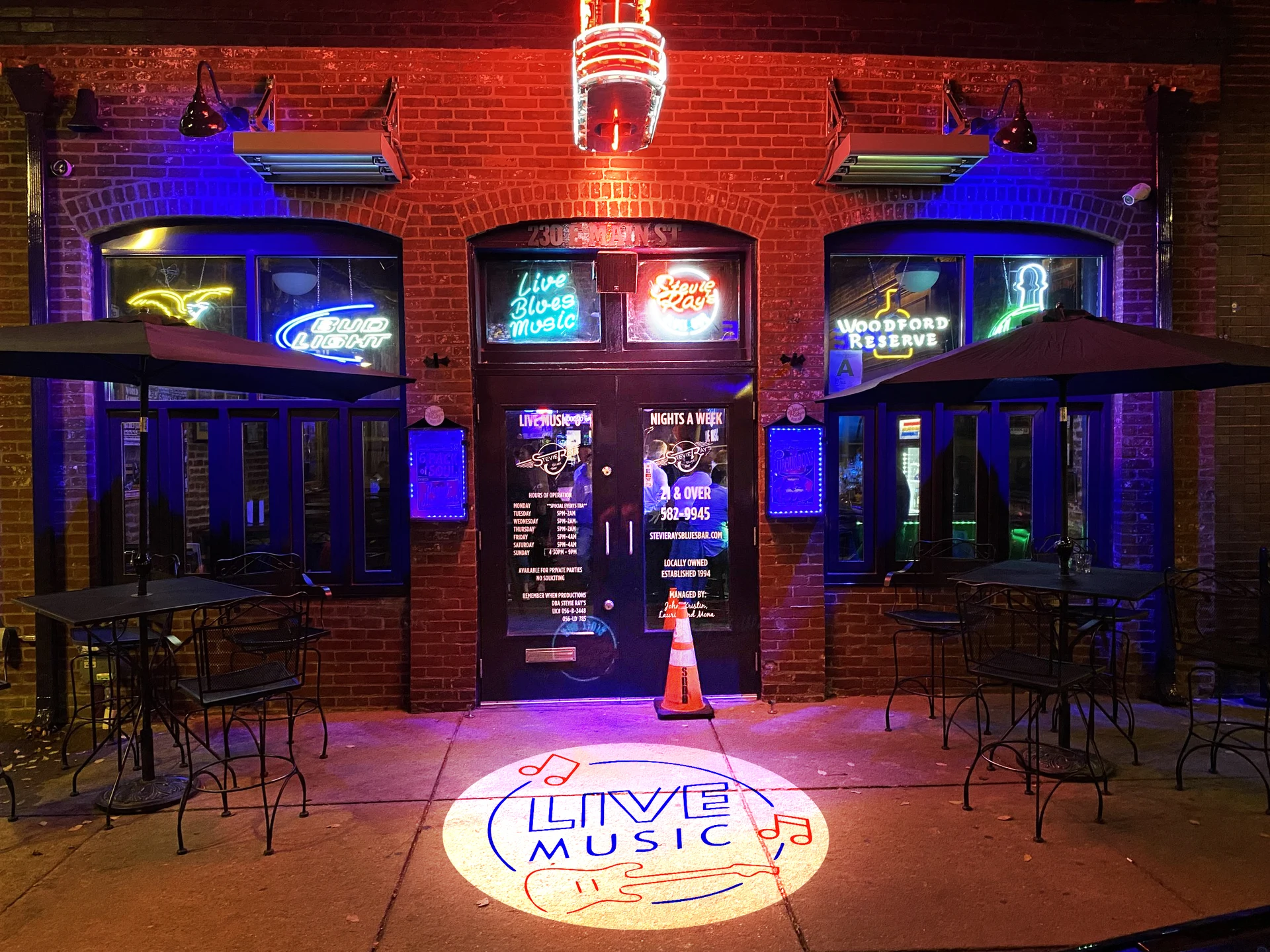
A carousel that automatically rotates through a monogram and several decorative designs through the night, each prism-multiplied into a fresh symmetric cluster — visual energy a static backdrop can't match.
Nightclub or DJ booth
A continuously cycling, multiplied pattern behind or around the DJ booth that keeps pace with the room's energy for hours of continuous operation — built for exactly this kind of sustained use.
Product launch or grand opening
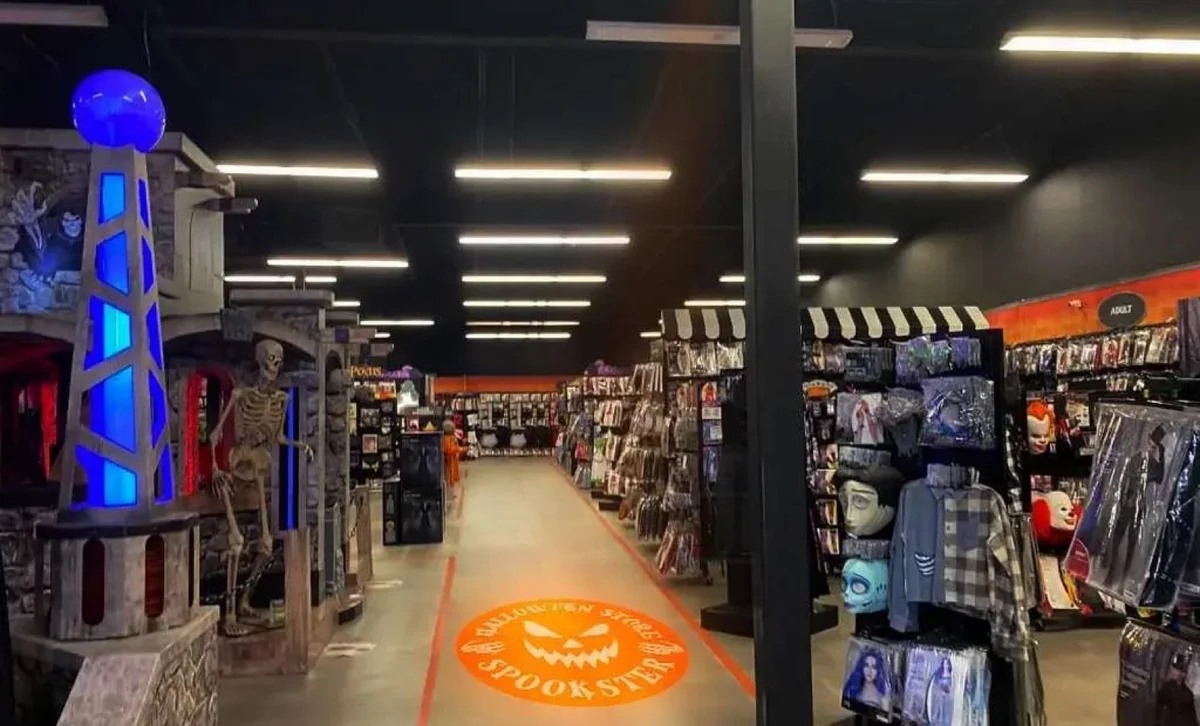
Motion draws eyes faster than a still image — a rotating, prism-multiplied brand pattern at the entrance or on a feature wall signals "something is happening here" the moment guests walk in.
Restaurant lounge or bar ambiance
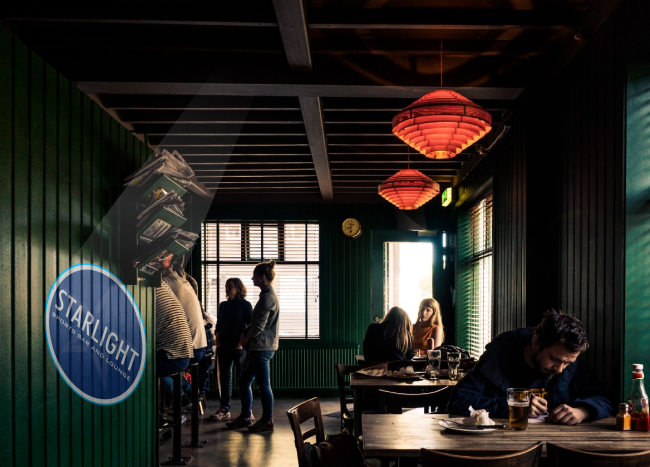
A slower rotation speed on a lounge wall creates a subtle, hypnotic ambient effect as designs and their multiplied patterns change gradually — dial the speed down for mood rather than high-energy motion.
Need a backdrop that holds perfectly still instead — for a ceremony, a storefront, or consistent brand photography? That's exactly what the 6-Gobo Static Projector is built for.
Frequently asked questions
What's the difference between the 6-Gobo Spin and 6-Gobo Static projector?
Both use the identical six-slot gobo carousel and the identical bundled TriScope/PentaScope prism lenses. The Spin model keeps the carousel turning on its own, automatically cycling through all six designs over time. The Static model positions the carousel once and leaves it there, so the same design stays in the beam until manually changed. Choose Spin for dance-floor or event-energy motion; choose Static for a consistent branded backdrop.
What do the TriScope and PentaScope lenses actually do?
They're prism lenses that split whichever single gobo design is currently in the beam into multiple copies arranged symmetrically — TriScope (3-Prism) makes 3 copies, PentaScope (5-Prism) makes 5. On Infinity's standard single-gobo projectors these are paid upgrades ($188.88 and $358.88+). Every KaleidoScope unit, including this one, ships with both lenses included free — you choose which one is preinstalled, and the other rides along as a spare.
Why does the 6-Gobo Spin cost more than the 6-Gobo Static at the same wattage?
The Spin model includes a continuous-rotation motor that drives the carousel during normal operation, which the Static model doesn't need since its carousel locks in place after setup. That added mechanism is reflected in a modest price difference at every wattage tier.
Why does the 6-Gobo Spin start at 80W instead of 35W like the 4-gobo version?
The 6-position carousel and its bundled prism-lens assembly need more base light output to project a clear, bright pattern than the smaller 4-gobo carousel does. The 6-gobo line's 80W floor keeps the entry-level unit's rotating pattern visibly bright.
How much does the Infinity KaleidoScope 6-Gobo Spin Projector cost?
It ranges from $1,187.88 for the 80W model up to $3,037.88 for the 700W model, with eight wattage tiers in between (100W, 130W, 150W, 200W, 300W, 400W, 500W, 600W). Both prism lenses are included at every wattage.
Can I control the rotation speed?
Yes — rotation speed is adjustable, so you can run a slower, more ambient turn for a lounge or restaurant setting, or a faster rotation for high-energy dance floor use.
Should I choose 4, 6, or 8 gobos for a moving pattern?
Four gobos gives the fewest design slots and the lowest entry price starting at 35W. Six gobos is the mid-point — room for a fuller rotation of designs than four, without the extra wattage the 8-gobo version needs. Eight gobos gives the most design variety for large dance floors and high-drama event walls.
What wattage do I need for a dance floor vs. a large ballroom or nightclub?
A mid-size reception dance floor with typical dimmed evening lighting is usually well served by 130W–150W. A large ballroom or nightclub-scale room with brighter house lighting typically needs 200W–400W to keep the pattern reading as vivid motion. Use the Projector Finder for an exact recommendation based on your room's distance, image size and lighting.
Get the right KaleidoScope Spin setup for your event ∞
Tell us your dance floor size, distance and lighting, and we'll prescribe the exact wattage — then show you real pricing for the 6-gobo Spin or Static.
Complete your projector setup
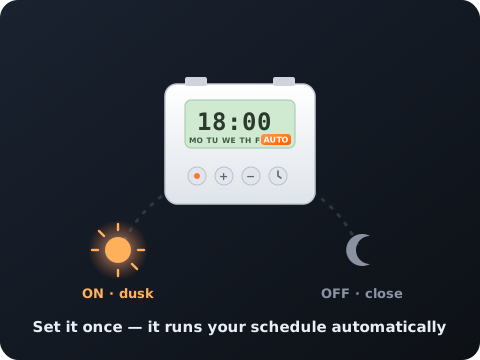
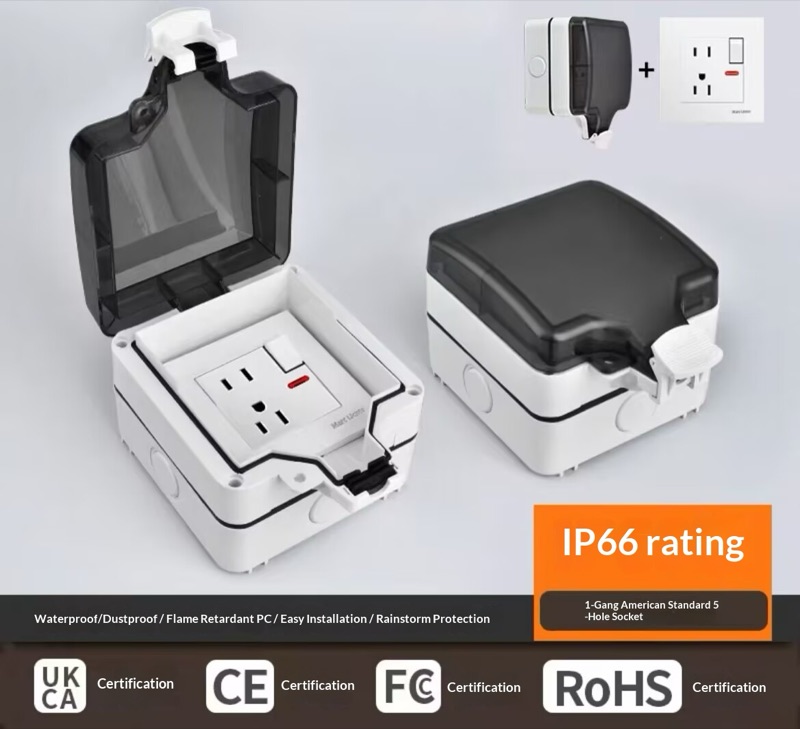
Automate when it runs and protect it from the weather — both add right on any projector.