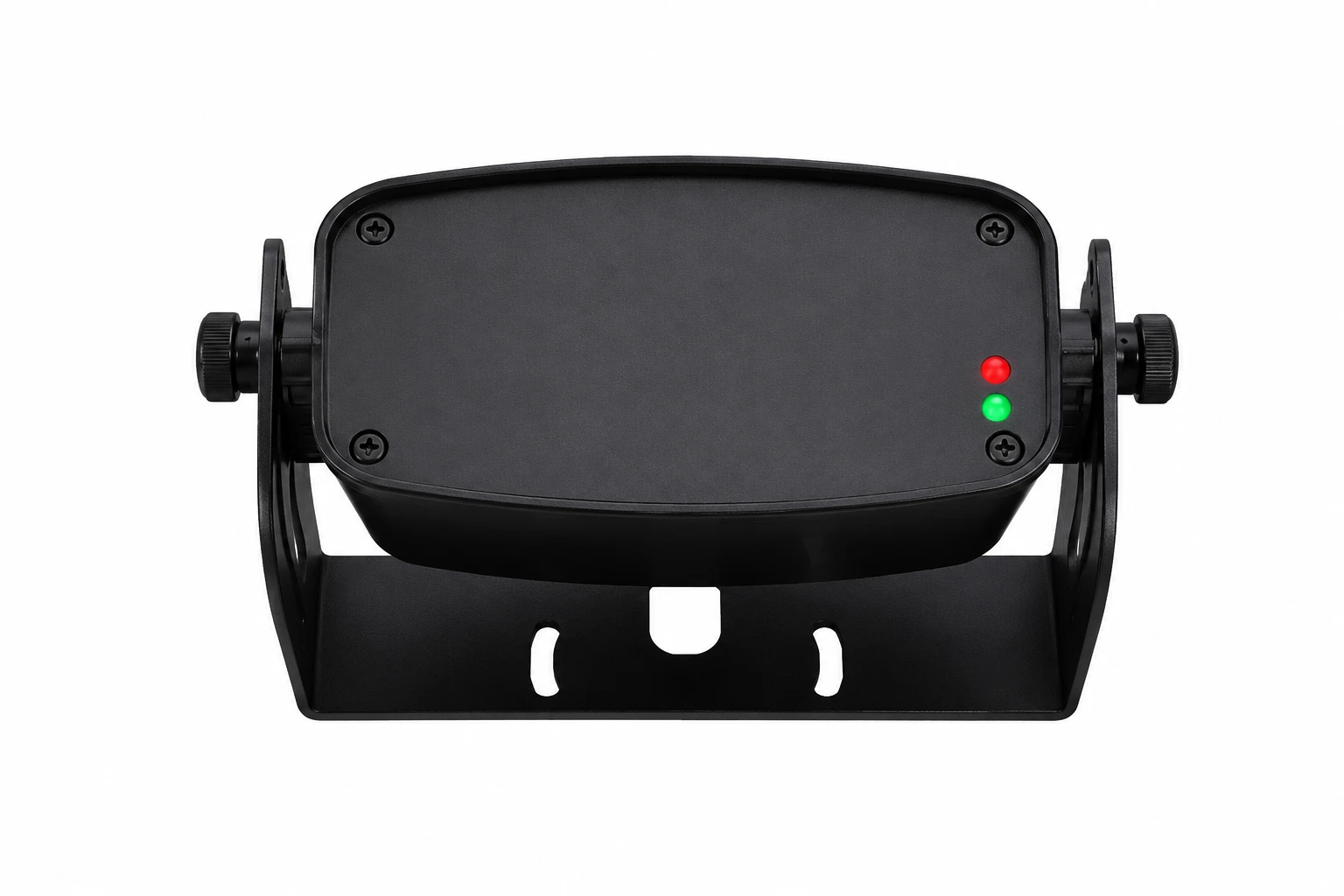
Made for the people on foot.
Point it down a walkway, a pedestrian crossing or a doorway people use, and the projector connected to it stays off until someone walks in. It is the more sensitive of the two sensors to human movement, so when the trigger is a person, this is the one to specify.
One sensor covers one direction of approach in one zone. Order one per dock door, aisle entrance or gate. Prefer to bundle it with a projector? It is also an add-on on every Industrial projector page.
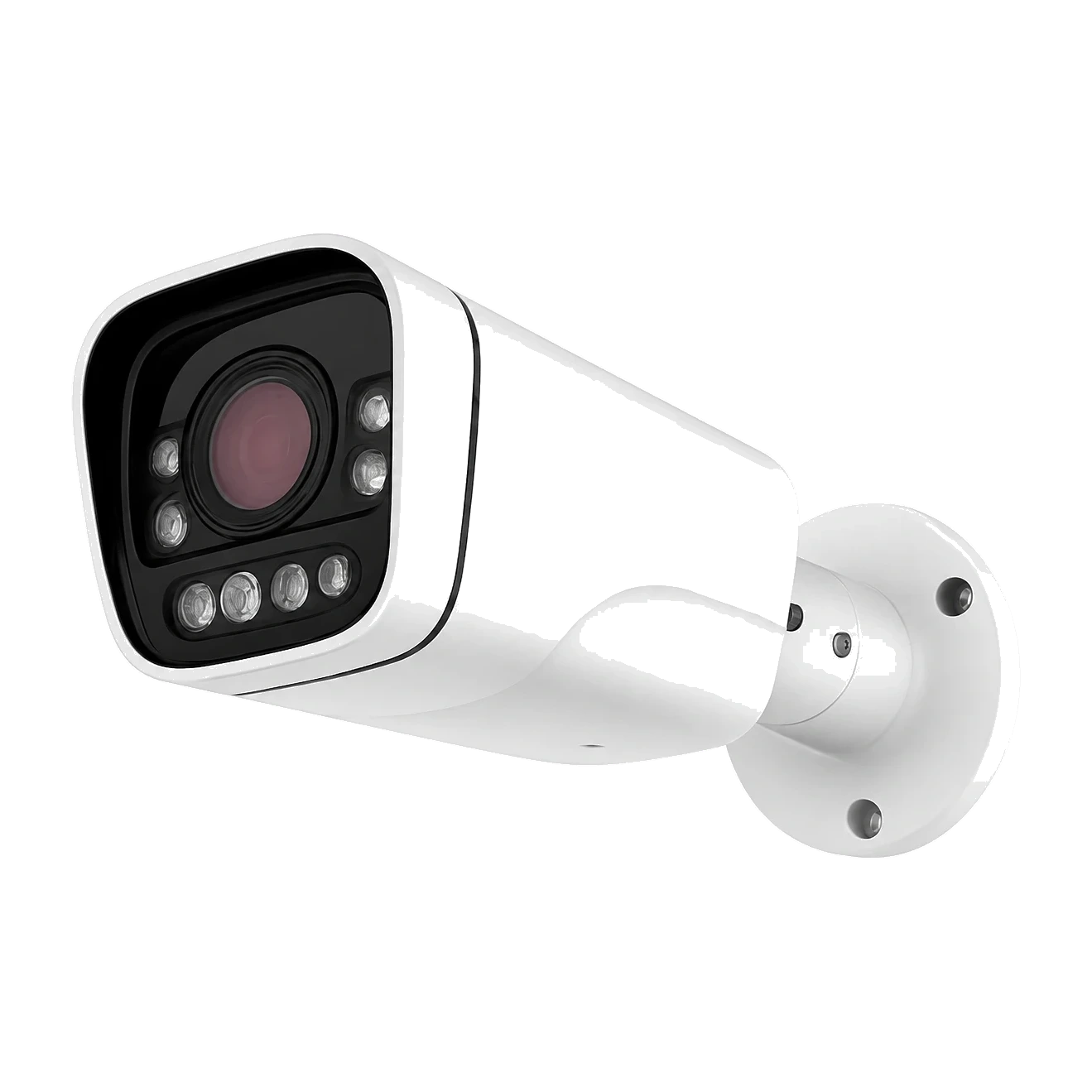
The Camera Sensor is a compact bullet camera with a detection engine behind it. Instead of listening for motion the way the radar does, it looks at the scene as a picture and decides whether a person has entered the area you care about. When one does, its relay closes and the projector connected to it switches on: a crossing pattern on the floor, a stop sign aimed at the drivers, a walkway line down the corridor.
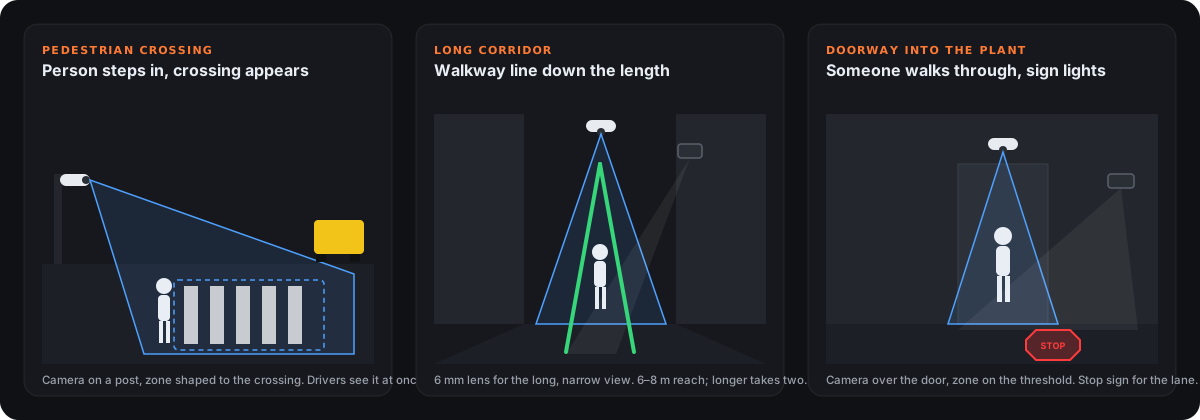
Because it works from an image, the zone it watches can be shaped. You can tune how sensitive it is and which part of the picture counts, so a walkway is covered without the aisle beside it, and traffic outside the zone is ignored. Two lens options set how wide it looks: the 3.6 mm lens takes in a wider, shorter walkway; the 6 mm lens reaches further down a narrower one.
It keeps seeing after dark. In color it works down to 0.01 lux, and in monochrome with its infrared illumination it works with no visible light at all, so a night-shift crossing is covered the same as a daytime one. It is IP65 sealed and rated from −30°C to +60°C, and it reaches 6 to 8 m (20 to 26 ft) across the area it watches.
Where the radar is the pick for vehicles and mixed lanes, the camera is the pick when the trigger is a person and you want to shape exactly where that person is detected. A busy warehouse opening with forklifts and foot traffic often runs one of each: the radar watching the truck lane, the camera watching the crossing.
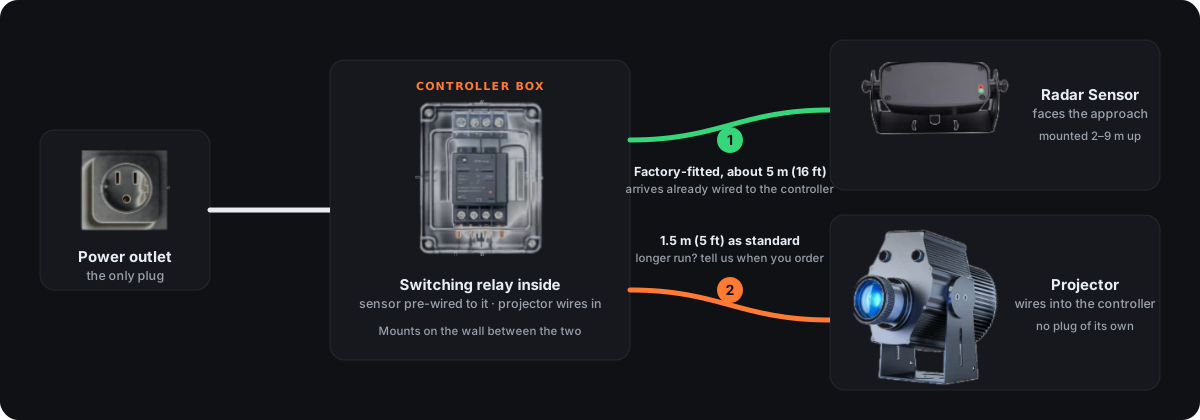
Three parts and one plug. The sensor arrives pre-wired to a small controller box, the projector wires into the controller, and the controller is the only thing that goes in an outlet.
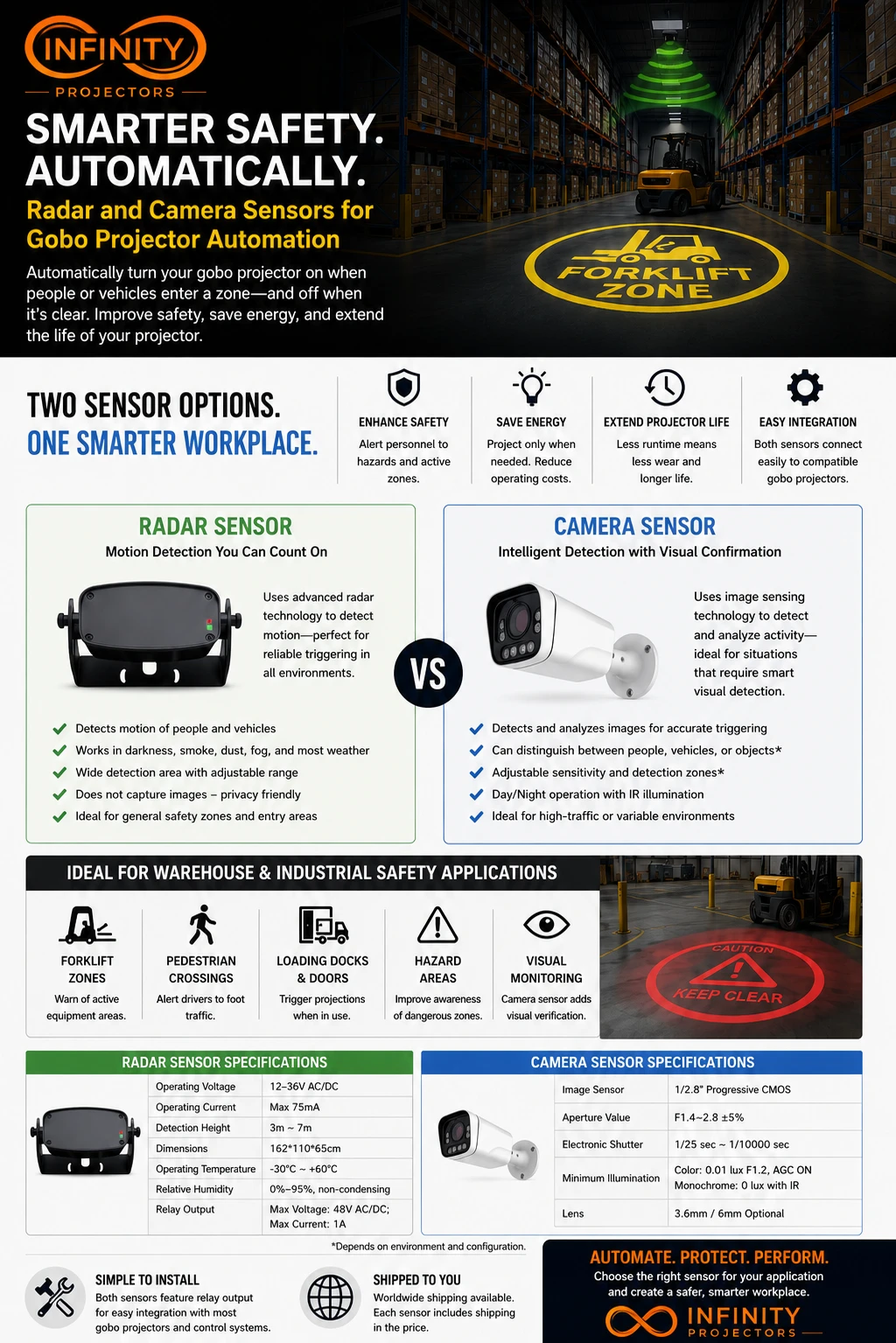
Both close a relay that switches the projector on. They differ in what they see and where they belong.
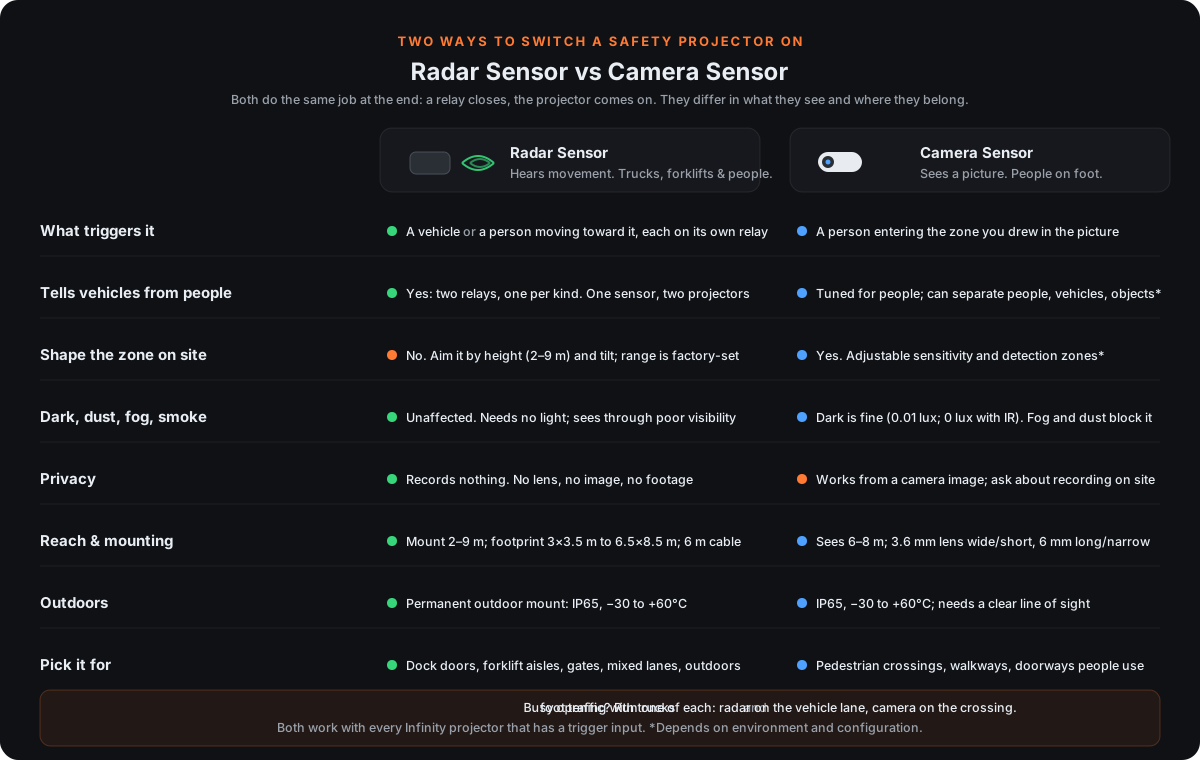
A busy opening with trucks and foot traffic often runs one of each: radar on the vehicle lane, camera on the crossing. *Depends on environment and configuration.
The sensor is the switch; one of these is the light. Every one of them accepts the trigger, and each product page offers this sensor as an add-on.
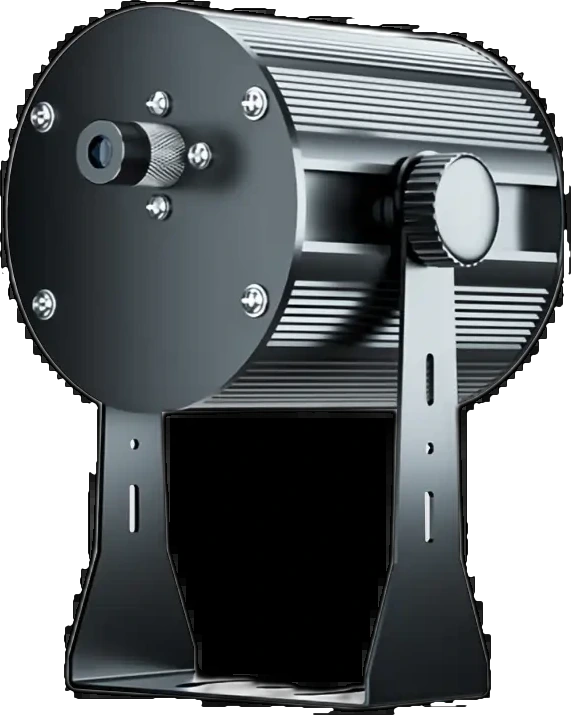 Laser Safety Line Projector
A crisp laser line across a dock bay or down an aisle, switched on by the sensor.
See the projector →
Laser Safety Line Projector
A crisp laser line across a dock bay or down an aisle, switched on by the sensor.
See the projector →
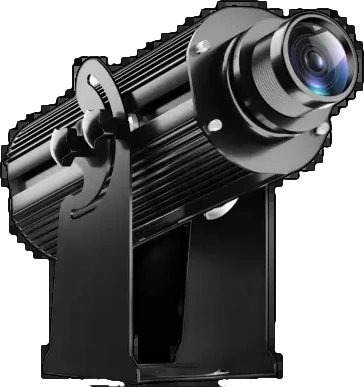 Infinity Titan Outdoor High Wattage Gobo Projector (150W–700W)
A high-wattage gobo projector for a large warning zone or sign, indoors or out.
See the projector →
Infinity Titan Outdoor High Wattage Gobo Projector (150W–700W)
A high-wattage gobo projector for a large warning zone or sign, indoors or out.
See the projector →
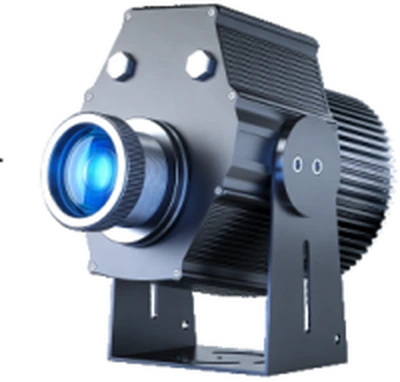 Infinity LY-Pro Compact High-Wattage Outdoor Gobo Projector (135W-200W)
A compact gobo projector for a keep-clear zone, stop sign or crossing pattern on the floor.
See the projector →
Infinity LY-Pro Compact High-Wattage Outdoor Gobo Projector (135W-200W)
A compact gobo projector for a keep-clear zone, stop sign or crossing pattern on the floor.
See the projector →
The number on the left is the spec. The column on the right is what it means for your install.
| Detail | Spec | What it means for you |
|---|---|---|
| Detection | Image-based, tuned for people; it can tell people, vehicles and objects apart* | It reacts to a person stepping into the zone rather than to anything that moves. *How finely it separates them depends on the environment and the setup. |
| Adjustable zones | Sensitivity and detection zones can be tuned* | Cover the walkway and ignore the aisle next to it. *Set up per site; depends on environment and configuration. |
| Reach | 6–8 m (about 20–26 ft) maximum | A full walkway or crossing from one mounting point. |
| Lens | 3.6 mm or 6 mm | 3.6 mm sees wider and shorter, for a broad crossing. 6 mm sees narrower and further, for a long corridor. |
| Low light | Color to 0.01 lux (F1.2, AGC on); monochrome to 0 lux with IR | Works on a night shift and in an unlit corridor. Infrared illumination means no visible light is needed at all. |
| Imager | 1/2.8" progressive CMOS, F1.4–2.8 aperture, shutter 1/25 to 1/10000 s | A proper camera sensor and lens, not a motion detector with a lens on it. |
| Environment | IP65, −30°C to +60°C (−22°F to 140°F) | Sealed against dust and water for warehouse and dock conditions. |
| Output | Relay output to the projector trigger input | Wires to the projector the same way the radar does: the relay closes, the projector comes on. |
| Life | About 50,000 hours | Years of continuous duty. |
Image-based detection tuned for pedestrians, and more sensitive to human movement than the radar. A person stepping into the crossing triggers it; the scene around them does not.
Tune the sensitivity and which part of the picture counts, so the walkway is covered and the aisle beside it is ignored. *Depends on environment and configuration.
0.01 lux in color, 0 lux in monochrome with infrared. Night shifts and unlit corridors are covered.
3.6 mm for a wide, short crossing; 6 mm for a long, narrow corridor.
About 20–26 ft: a full walkway from one mount.
IP65, −30°C to +60°C.
Radar on the truck lane, camera on the crossing: one opening, both kinds of traffic, each with its own warning.
Pair it with a Radar Sensor where the same opening also carries forklift or truck traffic. The radar tells vehicles from people and gives each its own relay, so the two sensors together cover a mixed-traffic zone with no gaps.
| Detects | People and pedestrians (image-based); can distinguish people, vehicles and objects depending on environment and configuration |
| Detection Range | 6–8 m (about 20–26 ft), maximum |
| Detection Zones | Adjustable sensitivity and zones (depends on environment and configuration) |
| Image Sensor | 1/2.8" Progressive CMOS |
| Aperture Value | F1.4 – 2.8 ±5% |
| Electronic Shutter | 1/25 sec – 1/10000 sec |
| Minimum Illumination | Color: 0.01 lux (F1.2, AGC ON) · Monochrome: 0 lux with IR |
| Lens | 3.6 mm or 6 mm (chosen at order) |
| Output | Relay output to the projector trigger input |
| Temperature Range | −30°C to +60°C (−22°F to 140°F) |
| Water Resistance | IP65 |
| Operating Life | About 50,000 hours |
| Works With | Any Infinity projector with a trigger input: Laser Safety Line, Titan, LY-Pro, Laser Line |
| Turnaround | 1–2 weeks |
The one-page flyer: radar vs camera side by side, applications and technical specs. Handy to forward to whoever signs off.
Yes, and it applies by itself in the cart: 5% off at 2–3 sensors, 8% at 4–6, 12% at 7–10, 15% at 11–20 and 18% at 21 or more, off every sensor in the order. A dock with four doors or a walkway with a dozen projectors gets the volume price without asking. Larger runs, or sensors mixed with projectors, go on a quote and are priced together.
Through a small controller box, the same as the radar. The camera comes on a 1 m (3 ft) cable to the controller, so the box mounts right beside the camera. The camera needs its own power plug, and so does the controller; the projector wires into the controller on 1.5 m (5 ft) of cable as standard, and we fit a longer run if you tell us the distance when you order.
Two or three on one controller. They all come on together when the camera sees someone in its zone. If each projector should light only for the person in front of it, each one needs its own camera and controller.
People. It looks at the walkway as an image and closes its relay when a person enters the zone you set, and it is more sensitive to human movement than the radar, which is why it is the pick when the trigger is a person. It can also tell people, vehicles and objects apart, though how finely depends on the environment and the setup.
For a pedestrian crossing across a forklift aisle, a Titan or LY-Pro gobo projector showing a crossing pattern or a stop sign aimed at the drivers. For a walkway line down a corridor, a Laser Safety Line projector. Both accept the camera's relay.
Anywhere the trigger is a person and you want to shape exactly where they are detected: a crossing across a busy aisle, a doorway from an office into a plant, a walkway beside racking. The radar cannot shape its zone; the camera can.
Yes. It is rated to 0.01 lux in color and to 0 lux in monochrome with infrared illumination, so it keeps detecting people with the lights off.
The 3.6 mm lens gives a wider field of view for a short, wide crossing. The 6 mm lens gives a narrower, longer-reaching view for a long corridor. Tell us the walkway and we pick it with you.
Up to 6–8 m (about 20–26 ft). It is IP65 sealed against dust and water, rated −30°C to +60°C (−22°F to 140°F), and built for roughly 50,000 hours of service.
It uses the camera image to detect people and to close a relay. If recording or storage matters for your privacy policy, ask us about the configuration for your site; the Radar Sensor records nothing at all and is the pick where that is a concern.
A camera can switch more than one projector when they sit close together, and a single crossing with one projector is one camera. How many you need depends on the layout: it sees 6–8 m, so a long walkway needs a camera every stretch, while a cluster of projectors around one crossing can share one. Send us the layout and we size it. On a mixed-traffic opening the usual setup is a radar on the truck or forklift lane and a camera on the pedestrian crossing.
Both. Every Infinity projector with a trigger input accepts it: the Laser Safety Line and Laser Line for floor lines, the Titan and LY-Pro for gobo signs and zones. Add it on the projector page or order it on its own here in any quantity.
1–2 weeks, the same as the projectors it ships with.
1–2 week turnaround. Order one per zone, any quantity.